
China's leading manufacturer of reinforced polypropylene fibers, offering comprehensive fiber solutions.
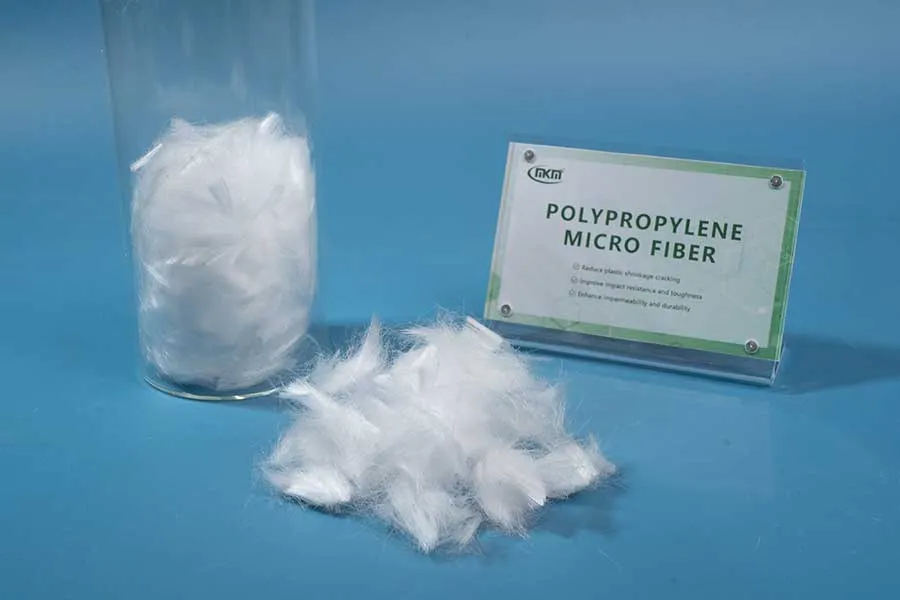
Polypropylene synthetic microfiber is a high-performance anti-crack reinforcement additive for concrete, mortar, and dry-mix applications.
The result: according to ASTM C1579 testing, properly dosed PP microfiber achieves 80-95% reduction in plastic shrinkage crack area compared to plain concrete. This is not a marginal improvement — it is the difference between a slab that cracks in its first day and one that does not.
Michem provides stable-quality PP microfiber in multiple lengths and diameters to reduce plastic shrinkage cracking, improve toughness, and enhance long-term durability.
After concrete is placed, water migrates upward through the matrix — a process called bleeding. Under normal conditions, this bleed water pools on the surface and evaporates gradually. But when evaporation exceeds 1.0 kg/m²/hour (per ACI guidelines), the surface dries faster than bleed water can replenish it. Negative pore pressure builds inside the capillaries, and the surface layer begins to pull itself apart.
This is where microfiber earns its keep. The dispersed filaments create thousands of micro-bridges across the forming crack planes. Each bridge provides a small but meaningful amount of tensile resistance — and because there are millions of them, the cumulative effect is substantial. The fiber network increases the early-age strain capacity of the concrete by distributing capillary stresses across a wider area rather than letting them concentrate at a single weak point.
Even when a micro-crack does initiate, the fibers straddling the gap prevent it from propagating. The crack cannot widen because each fiber it encounters acts as a mini-tie, holding both sides together. This keeps cracks at the micro-level — invisible to the eye and structurally inconsequential — rather than allowing them to develop into the visible, irregular cracks that compromise durability and aesthetics.
Key distinction: PP microfiber controls plastic shrinkage cracking (which occurs in the first 6 hours) and drying shrinkage cracking (which occurs over weeks). It does not provide structural load-bearing reinforcement. For that, use PP macrofiber (30-54mm, 500MPa+) or traditional steel reinforcement.
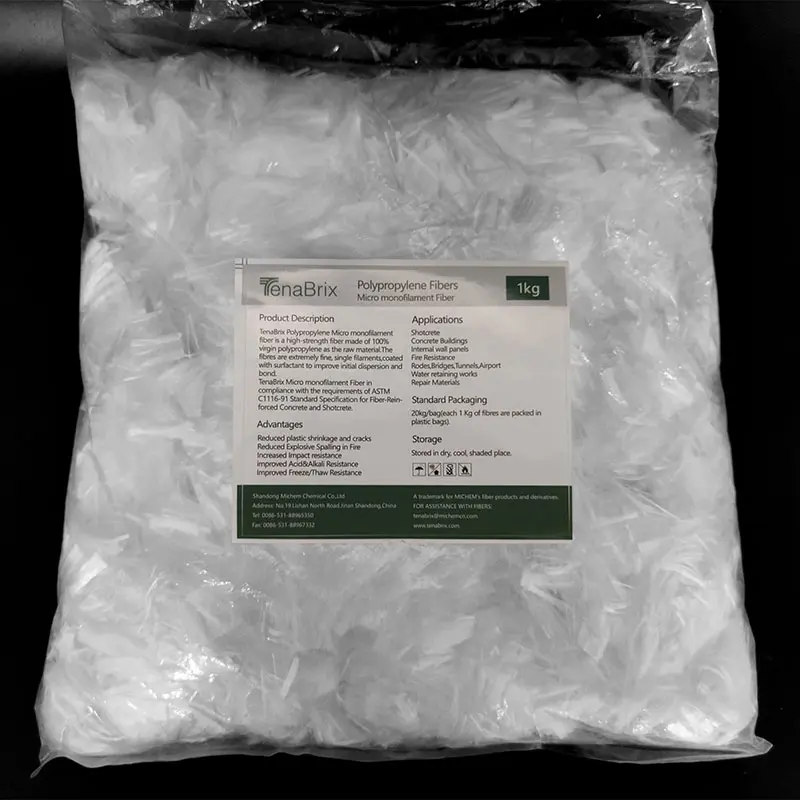
Michem is committed to continuous innovation and providing high-quality microfiber solutions for concrete. The following is a summary of product details:
| Fiber Type | Monofilament micro fiber |
| Brand | TenaBrix® |
| Material | 100% Virgin Polypropylene |
| Color | White |
| Length | 3mm, 6mm,9mm,12mm,18mm,19mm |
| Diameter | 30-32 µm |
| Tensile Strength | ≥500MPa |
| Elastic Modulus | ≥4500 MPa |
| Elongation | 20 – 25% |
| Specific Gravity | 0.91/ cm3 |
| Alkali, Salt, and Acid Resistance | High |
| Melting Point | 160 °C |
| Water Absorption | None |
| Electrical Conductivity | Low |
| Typical Dosage | 0.6-0.9 kg/m3 |
By choosing the right length, you can optimize crack resistance, toughness, and durability across a wide range of concrete projects.
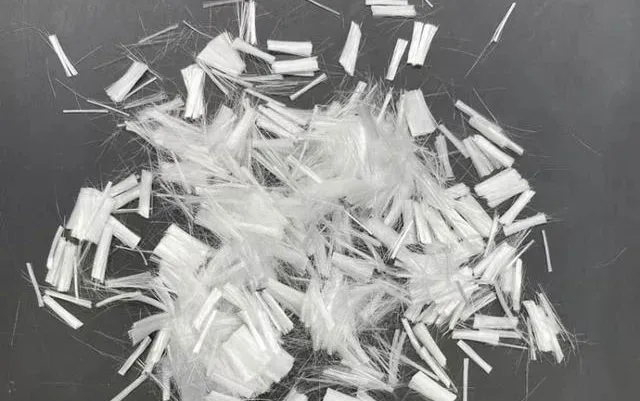
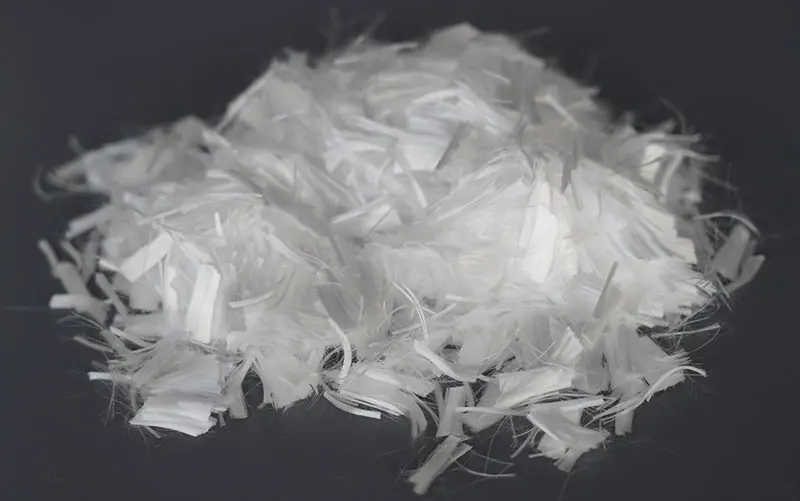
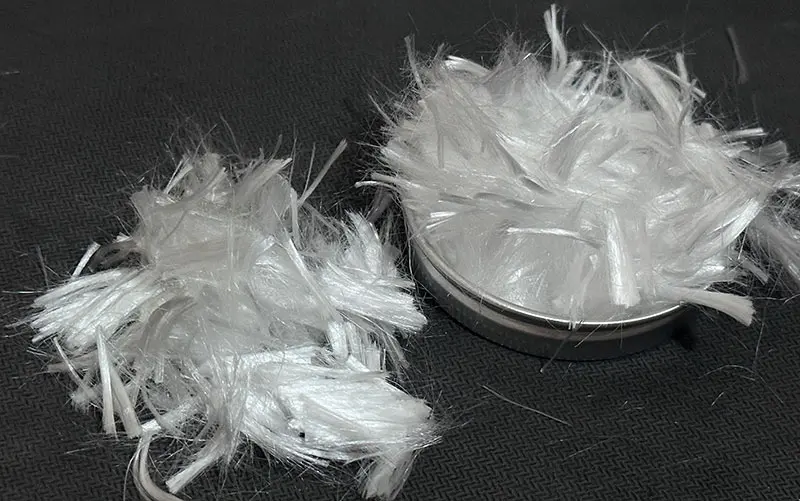
Both forms deliver equivalent crack-control performance when dosed correctly. The choice depends on your mixing equipment, application, and surface finish requirements.
| Characteristic | Monofilament | Fibrillated |
|---|---|---|
| Structure | Individual single filaments | Film network that unrolls during mixing |
| Dispersion Speed | Fast — separates immediately in mixer | Moderate — requires 30-60s additional mixing |
| Best Suited For | Shotcrete, mortar, plaster, precast | Slab-on-grade, large flatwork, pavements |
| Surface Finish | Smoother — fibers bury easily | May show faint pattern on power-troweled surfaces |
| Shotcrete Rebound | Lower — fibers embed in sprayed matrix | Higher — film structure can cause rebound |
| Dosage Range | 0.6-1.2 kg/m³ | 0.6-1.5 kg/m³ |
| Cost | Slightly higher (spinning process) | Slightly lower (film extrusion process) |
You are spraying concrete (shotcrete/gunite), producing precast elements with tight tolerances, mixing mortar or plaster, or need a flawlessly smooth trowel finish on interior floors.
You are pouring large slab-on-grade, exterior pavements, driveways, or any flatwork where the slight cost savings matter at scale and surface aesthetics are less critical.
Send us your mix design and application details via WhatsApp. Our technical team will recommend the optimal fiber form, length, and dosage within 24 hours — free of charge.
With outstanding performance and cost-effectiveness, Polypropylene Fiber is widely recognized as a reliable solution for concrete reinforcement and mortar crack control in construction industries worldwide.
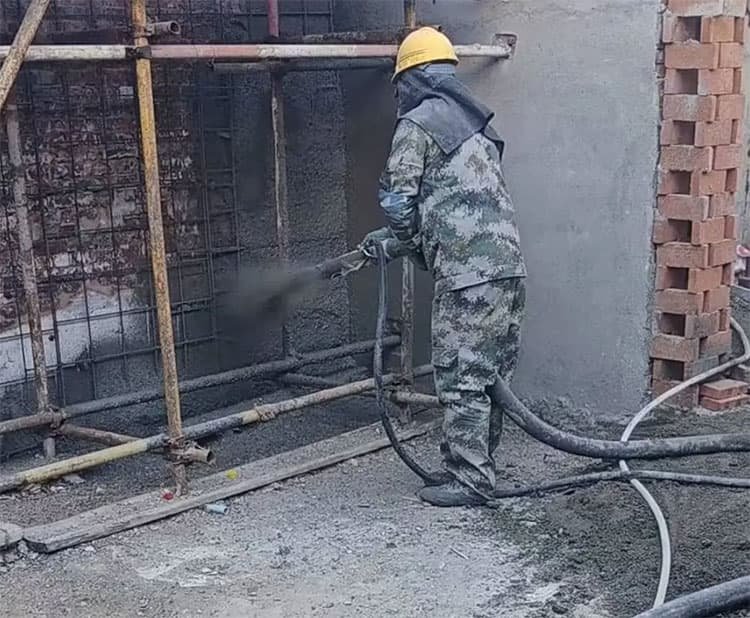
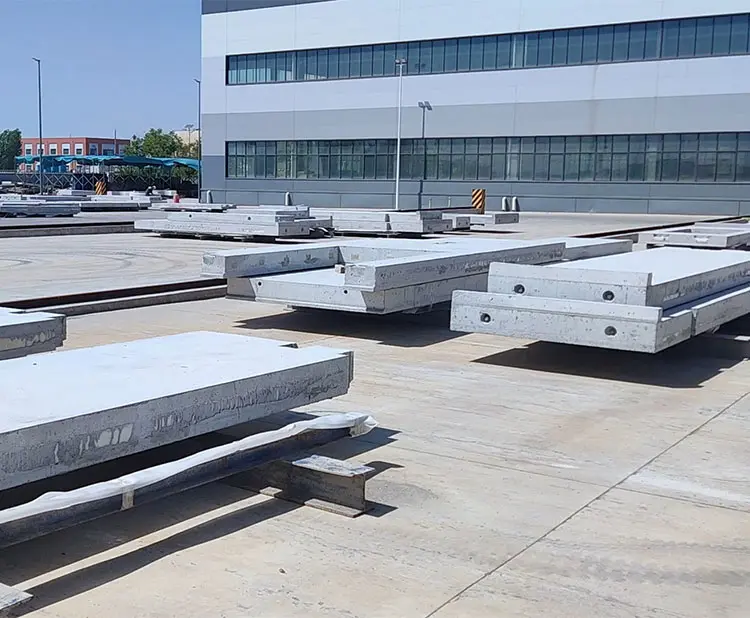
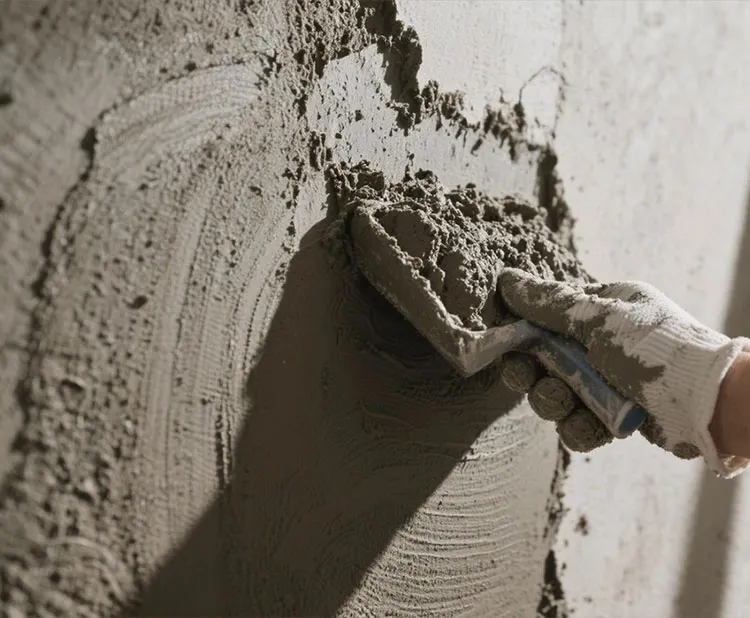

Dosage is the single most important variable after fiber form. Too little and crack control is marginal; too much and workability suffers. The ranges below are based on ASTM C1579 test data and field experience across 15+ export markets.
Mixing note: Add microfiber to the mixer before water. Mix dry for 30 seconds to distribute, then add water and mix normally. The water-soluble bags dissolve on contact — no manual opening required. Do not exceed 1.5 kg/m³ in pumpable concrete without pump trials.
✅ Comprehensive TDS & Brochure – Get in-depth technical details about our fiber.
✅ Free Sample (200g or 400g per bag) – Test our high-quality fiber in your formulations.
✅ Fast & Reliable Delivery – Shipped via FedEx or DHL straight to your door.
✅ Expert Support – Assistance with formula adjustments and technical guidance.
✅ MOQ – 1,000 kgs.
✅ ASTM C1116-03
✅ ASTM D7508
✅ EN 14889-2
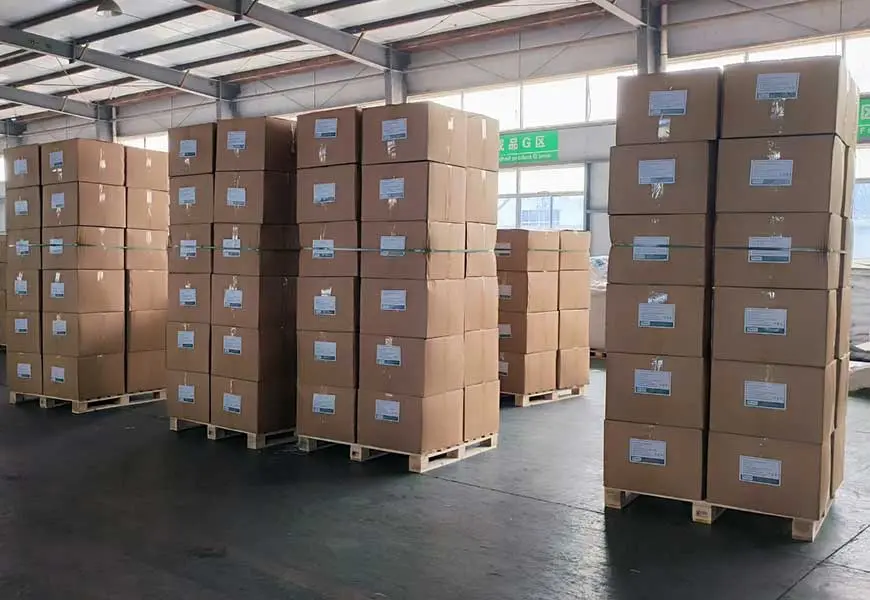
Standard plastic bags (12 mm or thicker): LCL container capacity: 10 tons; High-cube container: 24 tons .
Standard plastic bags (thinner than 9 mm): LCL container capacity: 9 tons; High-cube container: 22.4 tons (560 kg/pallet, 40 pallets total).
No — and anyone who tells you otherwise is oversimplifying. PP microfiber controls plastic shrinkage cracking (first 6 hours) and drying shrinkage cracking (first 28 days), but it does not provide structural load-bearing capacity. For non-structural temperature and shrinkage crack control in residential slabs, microfiber at 0.9-1.2 kg/m³ can replace light-gauge welded wire mesh. For any structural application — pavements carrying traffic, slabs supporting rack loads, suspended slabs — use PP macrofiber (30-54mm) or design with conventional steel reinforcement.
At standard dosages (0.6-0.9 kg/m³), the effect on workability is minimal and usually unnoticeable. At 1.2 kg/m³ and above, you may notice a slight reduction in slump — typically 10-15mm. This is normal and does not require additional water. If pumping, conduct a trial pour at your target dosage. Do not exceed 1.5 kg/m³ in pump mixes without a pump trial.
The general rule: match fiber length to aggregate size and application. For mortar and plaster, use 6mm. For standard slab-on-grade with 20mm aggregate, use 12mm. For shotcrete, use 6-9mm to avoid nozzle blockage. For large flatwork with 25-40mm aggregate, use 19mm. If in doubt, 12mm monofilament is the most versatile choice and covers 70% of applications.
Monofilament fibers virtually disappear into the matrix during finishing — they are thinner than a human hair and bury easily under trowel pressure. Fibrillated fibers may leave a faint texture on power-troweled surfaces, which is usually only visible at close range. If surface aesthetics are critical (architectural concrete, exposed floors), choose monofilament.
Sample orders (200g) are free and dispatched within 48 hours. Production orders start at 1 metric ton. Standard lead time is 7-10 days from confirmed order. FOB Qingdao pricing applies; we can also arrange CIF/DDP on request. Contact us for a volume quote tailored to your destination port.
Yes. PP is chemically inert, non-toxic, and does not leach into groundwater. It does not corrode, degrade, or react with cement chemistry. The production energy per kilogram of PP fiber is significantly lower than that of steel reinforcement of equivalent crack-control capacity. At end of life, PP fiber in concrete is encapsulated and poses no environmental risk.
Submit your formulation system to receive customized fiber selection recommendations.
Samples shipped within 48 hours, accompanied by batch stability comparison reports.
Annual framework agreements enjoy priority scheduling + tiered pricing.
Your inquiries answered within 4 hours. Please include your plant type and monthly volume for a tailored quote.
We will provide professional solutions to you promptly!
The inquiries answered within 4 hours. Please include your plant type and monthly volume for a tailored quote.