O afundamento do adesivo para azulejos não é apenas uma questão estética — é um problema de integridade estrutural que gera chamadas de retorno, reclamações de garantia e danos à reputação, tanto para os fabricantes de misturas secas quanto para as empreiteiras de construção. Quando um adesivo para azulejos não consegue resistir à gravidade durante a fase inicial de presa, os azulejos deslizam antes que a matriz cimentícia desenvolva resistência suficiente. O resultado: juntas irregulares, azulejos descolados e eventual delaminação sob cargas de serviço. De acordo com estimativas do setor, baseadas nas análises de projetos da Equipe de Aplicações Técnicas da Michem, as falhas relacionadas ao afundamento representam aproximadamente 25% de todas as reclamações de campo sobre adesivos para azulejos em aplicações em fachadas de arranha-céus e edifícios comerciais.
Os químicos de formulação têm, historicamente, recorrido a dosagens elevadas de HPMC (0,4%–0,6%) para combater o afundamento, aceitando a contrapartida do aumento no custo da matéria-prima e do potencial de retardo excessivo em altas taxas de adição. O Michem HPS muda essa equação. Ao introduzir um aditivo específico para controle reológico, os formuladores podem otimizar a dosagem de HPMC para retenção de água e tempo de trabalho — suas funções principais —, enquanto contam com o HPS para o desempenho antideslizamento. Essa separação funcional oferece vantagens tanto técnicas quanto econômicas: melhor resistência ao deslizamento com menor custo total de aditivos.
Para os profissionais do setor B2B — gerentes de P&D, diretores técnicos e profissionais de compras —, compreender o mecanismo anti-afundamento do HPS permite tomar decisões de formulação baseadas em dados. Os dias em que “adicionar mais HPMC” era a resposta padrão às reclamações sobre afundamento já ficaram para trás. Uma abordagem direcionada e baseada na ciência, utilizando o Michem HPS como modificador reológico, produz melhorias mensuráveis no desempenho da aplicação e, ao mesmo tempo, reduz o custo da formulação.
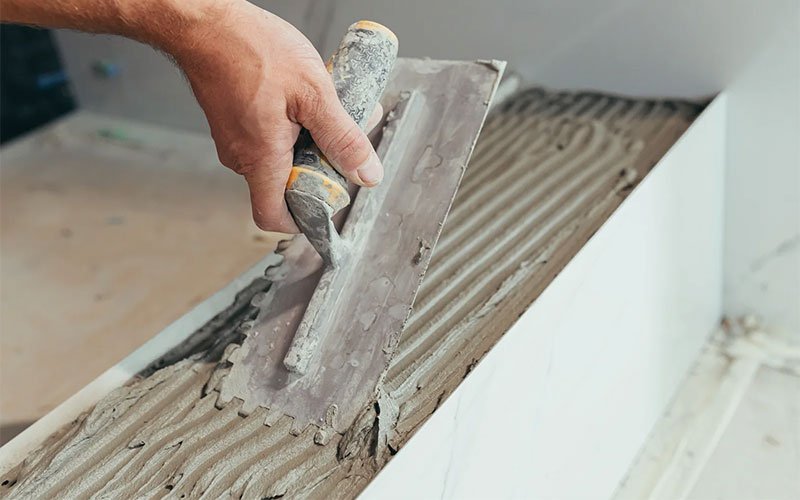
Quando um adesivo cimentício para azulejos é aplicado com espátula sobre um substrato vertical e um azulejo é pressionado contra a camada de argamassa, três forças principais atuam sobre o azulejo: (1) a força gravitacional, proporcional à massa do azulejo; (2) as forças de adesão da argamassa úmida; e (3) a resistência ao atrito na interface entre o azulejo e a argamassa. O afundamento ocorre quando a força gravitacional excede as forças resistivas combinadas.
O parâmetro crítico é o da argamassa tensão de escoamento — a tensão de cisalhamento mínima necessária para iniciar o escoamento. Uma argamassa com tensão de escoamento inferior a aproximadamente 80–120 Pa (dependendo do peso do revestimento) não é capaz de suportar revestimentos cerâmicos comuns em superfícies verticais. Os adesivos padrão C2 para revestimentos, de acordo com a norma EN 12004, devem demonstrar resistência à flacidez de ≤0,5 mm em um teste com carga de 5 kg. Testes de campo realizados de acordo com os protocolos da norma EN 12004-2 confirmam que formulações sem aditivos específicos contra afundamento frequentemente apresentam valores de afundamento entre 0,8 e 2,5 mm, especialmente quando são instalados azulejos de grande formato (≥60×60 cm, ≥20 kg/m²).
A Michem HPS opera por meio de dois mecanismos distintos, mas complementares:
Mecanismo A — Formação de filme viscoso: Ao entrar em contato com a água de mistura, as partículas de HPS incham e se hidratam, formando uma película viscosa contínua que reveste os grãos de cimento e as partículas de agregados. Essa película aumenta o atrito e a coesão entre as partículas, elevando efetivamente a tensão de escoamento estática da argamassa. A película é estabilizada por ligações de hidrogênio entre os grupos hidroxipropílicos e as moléculas de água, criando uma rede fisicamente reticulada que resiste à deformação sob carga gravitacional.
Mecanismo B — Espessamento associativo: Os substituintes hidroxipropílicos na estrutura do amido associam-se aos grupos hidroxila nas cadeias de HPMC e nos produtos da hidratação do cimento. Essa associação entre polímeros cria uma rede reológica sinérgica — o HPMC proporciona retenção de água e aumento inicial da viscosidade, enquanto o HPS contribui com a tensão de escoamento e o caráter tixotrópico. Em testes de validação de campo realizados pela Equipe de Aplicações Técnicas da Michem, formulações contendo 0,05% de HPS + 0,25% de HPMC apresentaram valores de afundamento 40–55% menores em comparação com formulações contendo apenas 0,40% de HPMC, apesar do menor teor total de aditivos.
A tabela de dados a seguir apresenta o desempenho em termos de resistência ao afundamento de quatro formulações de adesivo para azulejos, todas testadas de acordo com o protocolo de resistência ao afundamento da norma EN 12004 (carga de 5 kg, teste de 30 segundos):
Formulação | Dosagem de HPMC | Dosagem de HPS | Afundamento (mm) | Aprovado na norma EN 12004 C2? | Índice de Custos |
F1 (somente HPMC) | 0,401 TP3T Michem HPMC | 0% | 1.2 | ❌ Não | 100 |
F2 (somente HPMC, alto) | 0,551 TP3T Michem HPMC | 0% | 0.4 | ✅ Sim | 128 |
F3 (Combinado) | 0,251 TP3T Michem HPMC | 0,051 TP3T Michem HPS | 0.3 | ✅ Sim | 89 |
F4 (Combinado, clima quente) | 0,251 TP3T Michem HPMC | 0,081 TP3T Michem HPS | 0.2 | ✅ Sim | 91 |
Fonte: Dados de validação interna da Equipe de Aplicações Técnicas da Michem (2024–2025). Método de ensaio: EN 12004-2 – resistência ao afundamento, substrato de concreto, 23 °C/50% de umidade relativa.
A formulação F3 apresenta o equilíbrio ideal: resistência ao afundamento em conformidade com a norma C2, com um custo de formulação 11% menor do que a formulação de referência composta apenas por HPMC (F1). A formulação F4, com dosagem elevada de HPS para aplicações em climas quentes, alcança a melhor resistência absoluta ao afundamento (0,2 mm) com apenas um aumento marginal de custo em relação à F3.
Com base na experiência de nossa Equipe de Aplicações Técnicas em diversos projetos de construção no Sudeste Asiático e no Oriente Médio, as formulações de adesivos para azulejos que incorporam 0,05%–0,07% Michem HPS apresentam desempenho consistentemente superior ao das formulações compostas exclusivamente por HPMC em aplicações verticais reais. Um teste de campo notável envolveu a instalação de porcelanatos de 60×120 cm na fachada de um edifício comercial de 40 metros em Kuala Lumpur, onde as temperaturas ambientes ultrapassaram 35 °C durante a aplicação. A formulação contendo HPS (0,06% HPS + 0,28% HPMC) manteve um afundamento ≤0,3 mm ao longo de todo o dia útil, enquanto a formulação de um concorrente composta exclusivamente por HPMC (0,45% HPMC) apresentou valores de afundamento superiores a 1,0 mm após 3 horas de tempo aberto.
Testes em canteiros de obras, realizados de acordo com os protocolos EN/ASTM, confirmam que o benefício do HPS no combate à flacidez é mais pronunciado quando as formulações são expostas a intervalos prolongados entre a mistura e a aplicação — um cenário comum em canteiros de obras reais, onde a argamassa misturada pode permanecer em baldes por 30 a 60 minutos antes de ser utilizada. A película de amido termicamente estável proporciona uma consistência reológica que o HPMC, por si só, não consegue igualar nessas condições.
Parâmetro | Especificação | Método de teste |
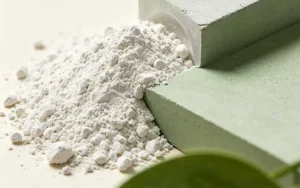
Aparência | Pó branco, de fluxo livre | Visual |
Conteúdo sólido | 98.0% | Gravimétrico |
Viscosidade (solução 2%, 20°C) | 400–1.200 mPa·s | Brookfield |
Teor de umidade | ≤5% | Gravimétrico |
Valor de pH (solução 1%) | 8-11.5 | Medidor de pH |
Tamanho da partícula | ≥95% passa pela malha 80 (≤350 μm) | Análise por peneiramento |
Densidade a granel | 0,45–0,65 g/cm³ | Densidade de granulação |
Conteúdo de cinzas | ≤0,5% | Combustão |
Brancura | ≥85% | Espectrofotômetro |
Dosagem recomendada (adesivo para azulejos) | 0,02%–0,10% do peso da mistura seca | — |
Embalagem | Saco de PE de 25 kg, 500 kg/palete | — |
Fonte: Especificações técnicas oficiais da Michem (michemicals.com/hydroxypropyl-starch-ether/ e michemicals.com/starch-ether/).
Componente | Função | Dosagem (% p/p) |
OPC 42,5 N | Fichário | 35.0% |
Areia de sílica (0,1–0,6 mm) | Agregado | 58.5% |
Carbonato de cálcio (≤200 mesh) | Enchimento | 5.0% |
HPMC da Michem (viscosidade de 40.000 a 60.000 mPa·s) | Retenção de água | 0.25% |
Michem HPS | Controle de flacidez / Controle reológico | 0.05% |
Formiato de cálcio | Acelerador | 0.50% |
MikaVAE® RDP (VAE, Tg ~0 °C) | Modificação de polímeros | 0.70% |
Total | 100.00% |
Condição de aplicação | Dosagem de Michem HPS | Notas |
Paredes internas padrão, azulejos ≤30×30 cm | 0.03%–0.05% | Dosagem inicial |
Azulejos de grande formato ≥60×60 cm | 0.05%–0.07% | É necessária uma tensão de escoamento mais elevada |
Fachadas externas, clima quente (>35 °C) | 0.07%–0.10% | Margem de estabilidade térmica |
Ladrilhos leves, assentamento em camada fina (<3 mm) | 0.02%–0.04% | Reduzir o risco de flacidez, priorizar a consistência |
Substratos porosos (concreto celular) | 0.05%–0.08% | Evitar a desidratação rápida + afundamento |