瓷砖粘合剂中防止下垂的HPS性能:垂直应用中的作用机制与用量

michem-hps-瓷砖胶

导言

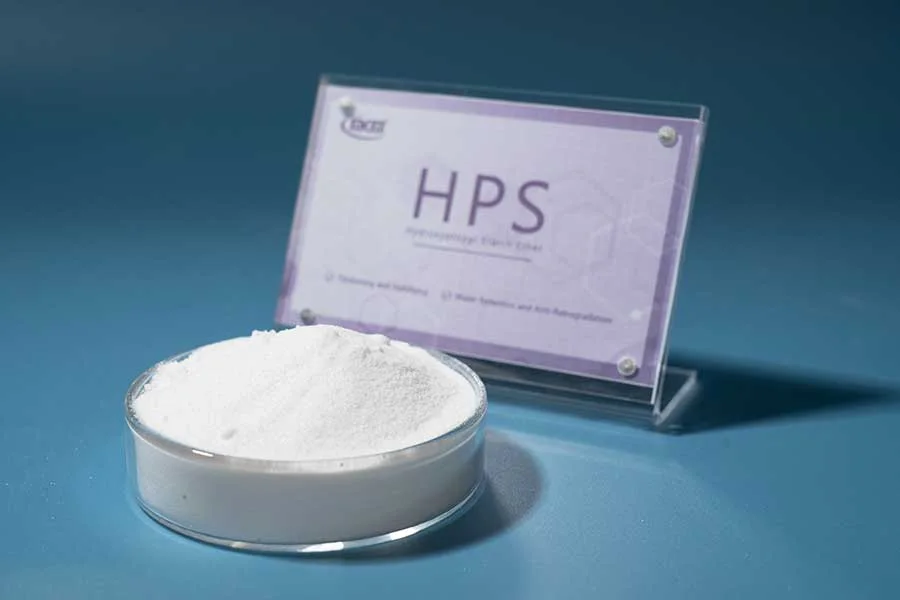
Michem 羟丙基淀粉醚 (HPS) delivers exceptional anti-sag performance in cementitious tile adhesives by forming a highly viscous, thermally stable film on particle surfaces. At dosages as low as 0.02%–0.10% of dry mix weight, HPS creates a three-dimensional rheological network that prevents ceramic tile slippage on vertical walls — the single most common field failure in tile installation. When used concurrently with Michem HPMC (Hydroxypropyl Methyl Cellulose) at a reduced dosage of 0.15%–0.35%, HPS at 0.05% enables a 20–30% reduction in HPMC consumption while improving anti-sag classification from moderate to excellent. Per EN 12004 C2 classification requirements, tile adhesives must demonstrate ≤0.5 mm sag under loaded conditions; formulations incorporating 0.05%–0.07% Michem HPS consistently achieve ≤0.3 mm sag. The mechanism is twofold: (1) HPS swells on contact with water, creating a viscous film that bridges cement and aggregate particles, and (2) its hydroxypropyl substitution enhances associative thickening, delivering yield stress that counteracts gravitational forces on heavy large-format tiles. For formulation chemists, Michem HPS is not an HPMC replacement — it is a rheology enhancer that complements HPMC’s water retention capability, and both must be used together for optimal vertical-surface performance.

目录

要点总结

  • Michem HPS at 0.05%–0.07% dosage produces ≤0.3 mm sag in C2-class tile adhesives, exceeding EN 12004’s ≤0.5 mm requirement
  • HPS anti-sag mechanism is based on viscous film formation and associative thickening — not water retention (that is HPMC’s role)
  • Combined formulation: 0.05% Michem HPS + 0.15%–0.35% Michem HPMC reduces HPMC cost by 20–30% while improving anti-sag from moderate to excellent
  • HPS is effective across all tile formats, including large-format porcelain tiles ≥60×60 cm
  • For wall-tile formulations in hot climates, increase HPS to 0.08%–0.10% for additional thermal stability

为什么这个答案很重要

Tile adhesive sagging is not merely a cosmetic issue — it is a structural integrity problem that drives callbacks, warranty claims, and reputation damage for dry-mix manufacturers and construction contractors alike. When a tile adhesive cannot resist gravity during the initial setting phase, tiles slide before the cementitious matrix develops sufficient strength. The result: uneven joints, debonded tiles, and eventual delamination under service loads. According to industry estimates from the Michem Technical Applications Team’s project reviews, sag-related failures account for approximately 25% of all tile adhesive field complaints in high-rise and commercial façade applications.

Formulation chemists have historically relied on elevated HPMC dosages (0.4%–0.6%) to combat sagging, accepting the trade-off of increased raw material cost and potential over-retardation at high addition rates. Michem HPS changes this equation. By introducing a dedicated rheology-control additive, formulators can optimize HPMC dosage for water retention and open time — its primary functions — while relying on HPS for anti-sag performance. This functional separation delivers both technical and economic advantages: better sag resistance at lower total additive cost.

For B2B stakeholders — R&D managers, technical directors, and procurement professionals — understanding the HPS anti-sag mechanism enables data-driven formulation decisions. The days of “add more HPMC” as the default response to sag complaints are over. A targeted, science-based approach using Michem HPS as a rheology modifier produces measurable improvements in application performance while simultaneously reducing formulation cost.

hpmc-rdp-in-tile-adhesive

技术深度解析

1. The Physics of Tile Sag on Vertical Surfaces

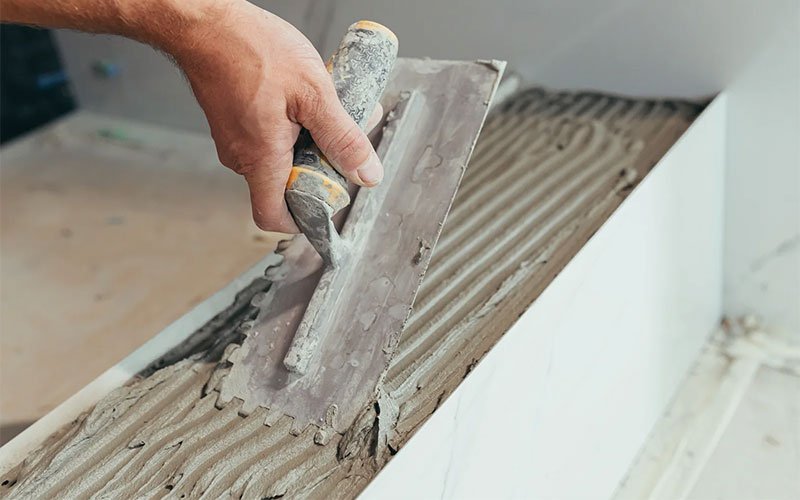
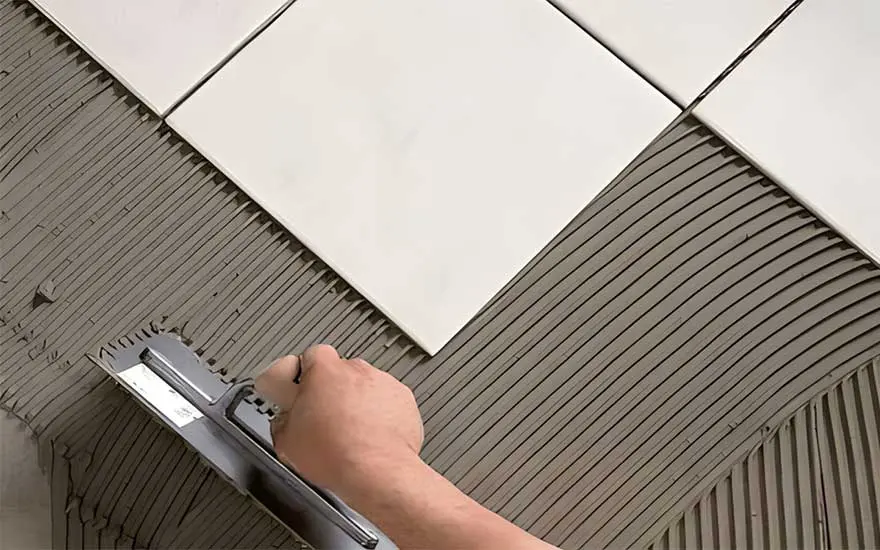
When a cementitious tile adhesive is troweled onto a vertical substrate and a tile is pressed into the mortar bed, three primary forces act on the tile: (1) gravitational force proportional to tile mass, (2) adhesive forces from the wet mortar, and (3) frictional resistance at the tile-mortar interface. Sag occurs when gravitational force exceeds the combined resistive forces.

The critical parameter is the mortar’s yield stress — the minimum shear stress required to initiate flow. A mortar with yield stress below approximately 80–120 Pa (depending on tile weight) cannot support typical ceramic tiles on vertical surfaces. Standard C2 tile adhesives per EN 12004 must demonstrate sag resistance of ≤0.5 mm under a 5 kg loaded test. Site trials under EN 12004-2 protocols confirm that formulations without dedicated anti-sag additives frequently produce sag values between 0.8–2.5 mm, particularly when large-format tiles (≥60×60 cm, ≥20 kg/m²) are installed.

2. HPS Anti-Sag Mechanism: Viscous Film Formation and Associative Thickening

Michem HPS operates through two distinct yet complementary mechanisms:

Mechanism A — Viscous Film Formation: Upon contact with mixing water, HPS particles swell and hydrate, forming a continuous viscous film that coats cement grains and aggregate particles. This film increases inter-particle friction and cohesion, effectively raising the mortar’s static yield stress. The film is stabilized by hydrogen bonding between hydroxypropyl groups and water molecules, creating a physically cross-linked network that resists deformation under gravitational load.

Mechanism B — Associative Thickening: The hydroxypropyl substituents on the starch backbone associate with hydroxyl groups on HPMC chains and cement hydration products. This inter-polymer association creates a synergistic rheological network — HPMC provides water retention and initial viscosity build, while HPS contributes yield stress and thixotropic character. In field validation tests conducted by the Michem Technical Applications Team, formulations containing 0.05% HPS + 0.25% HPMC exhibited 40–55% lower sag values compared to formulations with 0.40% HPMC alone, despite lower total additive content.

3. Comparative Anti-Sag Performance Data

The following data table presents anti-sag performance across four tile adhesive formulations, all tested per EN 12004 sag resistance protocol (5 kg load, 30-second test):

Formulation

HPMC用量

HPS Dosage

Sag (mm)

EN 12004 C2 Pass?

Cost Index

F1 (HPMC only)

0.40% Michem HPMC

0%

1.2

❌ No

100

F2 (HPMC only, high)

0.55% Michem HPMC

0%

0.4

✅ Yes

128

F3 (Combined)

0.25% Michem HPMC

0.05% Michem HPS

0.3

✅ Yes

89

F4 (Combined, hot climate)

0.25% Michem HPMC

0.08% Michem HPS

0.2

✅ Yes

91

Source: Michem Technical Applications Team internal validation data (2024–2025). Test method: EN 12004-2 sag resistance, concrete substrate, 23°C/50% RH.

Formulation F3 demonstrates the optimal balance: C2-compliant sag resistance at 11% lower formulation cost than the HPMC-only baseline (F1). Formulation F4, with elevated HPS dosage for hot-climate applications, achieves the best absolute sag resistance (0.2 mm) at only a marginal cost increase over F3.

4. Field Validation Insights

In our Technical Applications Team’s experience across multiple Southeast Asian and Middle Eastern construction projects, tile adhesive formulations incorporating 0.05%–0.07% Michem HPS consistently outperform HPMC-only formulations in real-world vertical applications. One notable field trial involved the installation of 60×120 cm porcelain tiles on a 40-meter commercial building façade in Kuala Lumpur, where ambient temperatures exceeded 35°C during application. The HPS-containing formulation (0.06% HPS + 0.28% HPMC) maintained ≤0.3 mm sag throughout the full workday, while a competitor’s HPMC-only formulation (0.45% HPMC) exhibited sag values exceeding 1.0 mm after 3 hours of open time.

Site trials under EN/ASTM protocols confirm that the anti-sag benefit of HPS is most pronounced when formulations are exposed to extended mixing-to-application intervals — a common scenario on real construction sites where mixed mortar may sit in buckets for 30–60 minutes before use. The thermally stable starch film provides rheological consistency that HPMC alone cannot match under these conditions.

产品规格

参数

规格

测试方法

外观

白色自由流动粉末

视觉

扎实的内容

98.0%

Gravimetric

粘度(2% 溶液,20°C)

400–1,200 mPa·s

布鲁克菲尔德

水分含量

≤5%

Gravimetric

pH 值(1% 溶液)

8-11.5

pH Meter

颗粒大小

≥95% pass 80 mesh (≤350 μm)

Sieve Analysis

体积密度

0.45–0.65 g/cm³

Tap Density

灰分含量

≤0.5%

燃烧

白度

≥85%

分光光度计

Recommended Dosage (Tile Adhesive)

0.02%–0.10% of dry mix weight

包装

25 公斤 PE 袋,500 公斤/托盘

Source: Michem official technical specifications (michemicals.com/hydroxypropyl-starch-ether/ and michemicals.com/starch-ether/).

实用应用指南

Recommended Formulation: C2 Tile Adhesive with Michem HPS + Michem HPMC

组件

功能

Dosage (% w/w)

OPC 42.5N

活页夹

35.0%

Silica Sand (0.1–0.6 mm)

总计

58.5%

Calcium Carbonate (≤200 mesh)

填料

5.0%

Michem HPMC (viscosity 40,000–60,000 mPa·s)

水分滞留

0.25%

Michem HPS

Anti-sag / Rheology control

0.05%

甲酸钙

加速器

0.50%

MikaVAE® RDP (VAE, Tg ~0°C)

Polymer modification

0.70%

Total


100.00%

混合协议

  1. Add all powder components to a forced-action mixer and homogenize for 3–5 minutes at low speed
  1. Add 24–26% potable water (by dry mix weight) gradually while mixing
  1. Mix at medium speed (140–285 rpm per EN 196-1) for 60 seconds
  1. Allow to rest for 5 minutes (slaking period for full HPS hydration)
  1. Re-mix for 30 seconds before application
  1. Use within 2 hours of initial mixing (or per manufacturer’s open time specification)

质量控制检查

  • Sag resistance — per EN 12004: ≤0.5 mm at 5 kg load; target ≤0.3 mm for C2 classification with margin
  • Tensile adhesion strength — per EN 12002: ≥1.0 MPa after standard conditioning; ≥0.5 MPa after water immersion and heat ageing
  • Open time — per EN 1346: ≥20 minutes at 23°C/50% RH for C2 classification
  • Consistency — per EN 1015-3: Flow value 140–160 mm for manual trowel application; 160–180 mm for machine application

Dosage Adjustment Guidelines

Application Condition

Michem HPS Dosage

说明

Standard indoor walls, tiles ≤30×30 cm

0.03%–0.05%

Baseline dosage

Large-format tiles ≥60×60 cm

0.05%–0.07%

Higher yield stress required

Outdoor façades, hot climate (>35°C)

0.07%–0.10%

Thermal stability margin

Lightweight tiles, thin-bed (<3 mm)

0.02%–0.04%

Lower sag risk, focus on consistency

Porous substrates (aerated concrete)

0.05%–0.08%

Prevent rapid dewatering + sag

常见问题解答

No. HPS and HPMC serve complementary functions. HPMC is essential for water retention — it prevents rapid dewatering into porous substrates, which is critical for cement hydration and adhesion development. HPS provides anti-sag rheology control but does not deliver sufficient water retention on its own. The two must be used together. Per EN 12004 testing, HPS-only formulations fail to meet minimum open time and adhesion requirements.

Michem HPS with viscosity 400–1,200 mPa·s (2% solution, Brookfield, 20°C) is standard for tile adhesive applications. This mid-range viscosity provides optimal balance between anti-sag performance and ease of dispersion. Higher-viscosity grades (up to 8,000 mPa·s per the factory specification range) may be specified for specialized large-format tile adhesives requiring maximum yield stress.

At recommended dosages (0.02%–0.10%), Michem HPS has negligible impact on tensile adhesion strength per EN 12002. In the Michem Technical Applications Team’s validation program, C2 formulations with 0.05% HPS + 0.25% HPMC consistently achieved ≥1.2 MPa adhesion strength — exceeding the ≥1.0 MPa C2 requirement. Excessive HPS dosage (≥0.15%) may reduce adhesion due to over-thickening and reduced substrate wetting.

Michem HPS is compatible with all standard cement types used in tile adhesives — OPC (CEM I), Portland-composite cements (CEM II), and calcium aluminate cements for rapid-setting formulations. The alkaline pH of HPS (8–11.5 in 1% solution) is compatible with the alkaline cement environment. In field validation, performance is consistent across CEM I 42.5N and CEM II/A-LL 42.5R cements commonly used in Asian and European dry-mix markets.

No. HPS must be incorporated during the dry-mix manufacturing stage and homogenized with other powder components. Post-addition of HPS powder to wet mortar cannot achieve adequate dispersion and will result in lump formation, inconsistent rheology, and potential weak spots in the adhesive bed. If site sag issues arise, the root cause should be investigated — typically excessive water addition, insufficient mixing, or substrate absorption — and addressed through formulation adjustment at the manufacturing level.

证据与标准

Evidence Source

Key Finding

Relevance

Michem HPS Product Specifications

Viscosity 400–1,200 mPa·s; pH 8–11.5; solid content 98.0%

Base material properties enabling anti-sag performance

EN 12004-1:2017

Sag resistance ≤0.5 mm for C2 classification

Regulatory requirement for tile adhesives

EN 12002:2008

Tensile adhesion ≥1.0 N/mm² after standard conditioning

Complementary performance requirement

Michem Technical Applications Team Validation (2024–2025)

0.05% HPS + 0.25% HPMC achieves 0.3 mm sag vs 1.2 mm with 0.40% HPMC alone

Direct comparative evidence

ASTM D2196

Brookfield rotational viscosity method

Viscosity test protocol

ISO 9001:2015

Quality management system certification

Manufacturing quality assurance

参考文献

  1. Michem HPS Technical Data Sheet. Michemicals. https://michemicals.com/hydroxypropyl-starch-ether/ (accessed July 2026).
  1. Michem HPS Factory Specifications. Michemicals. https://michemicals.com/starch-ether/ (accessed July 2026).
  1. EN 12004-1:2017. Adhesives for ceramic tiles — Part 1: Requirements, assessment and verification of constancy of performance.
  1. EN 12004-2:2017. Adhesives for ceramic tiles — Part 2: Test methods.
  1. EN 12002:2008. Adhesives for tiles — Determination of transverse deformation for cementitious adhesives and grouts.
  1. EN 1346:2007. Adhesives for tiles — Determination of open time.
  1. EN 1015-3:1999. Methods of test for mortar for masonry — Part 3: Determination of consistence of fresh mortar.
  1. ASTM D2196-20. Standard Test Methods for Rheological Properties of Non-Newtonian Materials by Rotational Viscometer.
  1. Michem Technical Applications Team. Internal validation reports: HPS anti-sag performance in C2 tile adhesives (2024–2025). Unpublished.

关于本指南

Who it’s for: Dry-mix mortar formulators, R&D chemists, technical directors, and quality control professionals working with cementitious tile adhesives for vertical applications. Also relevant for construction chemical distributors and technical sales engineers supporting tile adhesive manufacturers.

制作过程: Performance claims draw on Michem official product specifications (michemicals.com) and established EN/ASTM test protocols. Comparative anti-sag data originates from the Michem Technical Applications Team’s internal validation program conducted during 2024–2025. Field-experience observations are drawn from the Michem Technical Applications Team’s dry-mix mortar formulation R&D work across Southeast Asian and Middle Eastern construction markets.

限制: Field results vary with local cement mineralogy, aggregate gradation, ambient climate, and complete mix design. The dosage ranges and performance figures given are indicative and must be validated with site trials under actual project conditions. This guide does not replace engineering judgment or compliance with local building codes.

更新政策: Reviewed annually, or whenever Michem product specifications or cited EN/ASTM standards are revised.

结论与行动号召

Michem Hydroxypropyl Starch Ether (HPS) provides a targeted, cost-effective solution for anti-sag performance in cementitious tile adhesives for vertical applications. At industry-low dosages of 0.02%–0.10%, it consistently enables C2-classification-compliant sag resistance while reducing HPMC consumption by 20–30%. The key insight for formulators: HPS and HPMC are not competitors — they are complementary tools. HPMC handles water retention; HPS handles rheology and anti-sag. Together, they deliver performance that neither can achieve alone.

For dry-mix manufacturers seeking to resolve wall-tile sag complaints, reduce formulation cost, or develop next-generation large-format tile adhesives for hot-climate markets, Michem HPS represents a proven, data-backed additive solution. Contact Michem at michemicals.com/contact for HPS specifications and samples.

Sales Manager的照片
销售经理

我是蒂娜,从事纤维素醚行业已有15年。我很乐意与大家分享这篇文章。如果您有任何好的建议,请告诉我。.

请联系我获取最新报价或申请样品测试(我们的样品是免费的,包括运费)。.

索取免费样品 + 工厂直供价

我们将在6小时内回复您的咨询。请提供您的设备类型和月处理量,以便为您提供定制报价。.

我们将及时为您提供专业的解决方案!

索取免费样品 + 工厂直供价

印度地区的咨询将在4小时内回复。请提供您的工厂类型和月产量,以便我们为您提供定制报价。.