
According to the Michem product page, polyacrylonitrile fiber (PAN fiber) is a high-performance synthetic fiber made from acrylonitrile monomers. Unlike generic PP (polypropylene) fibers, its rigid molecular structure delivers:
These properties make PAN fiber the top choice for infrastructure projects where concrete must withstand extreme weather, chemical exposure, or dynamic loads.
The Michem product page provides a direct comparison:
“Polyacrylonitrile fiber has 2x higher tensile strength and 98% alkali resistance, compared to PP fiber’s 60% alkali resistance. This makes PAN fiber ideal for long-term infrastructure projects, while PP fiber is better for low-stress applications like residential concrete.”
The page also notes that PAN fiber offers a 25-year service life in concrete structures compared to 10–15 years for standard PP fiber, and is non-corrosive, eliminating the risk of rust staining common with steel fiber reinforcement.
All data below is taken directly from the Michem PAN fiber product page.
| Parameter | Specification |
|---|---|
| Composition | 100% Polyacrylonitrile |
| Equivalent Diameter | 14–18 μm |
| Available Lengths | 3 mm, 6 mm, 12 mm, 18 mm |
| Tensile Strength | ≥ 500 MPa |
| Elastic Modulus | ≥ 4,000 MPa |
| Heat Resistance | ≥ 200°C |
| Alkali & Acid Resistance | Super High |
| Appearance | Light yellow |
Source: michemicals.com
Michem offers three distinct PAN fiber types, each engineered for specific performance requirements:
| Product Type | Material | Tensile Strength | Alkali Resistance | Thermal Stability |
|---|---|---|---|---|
| High-Modulus PAN Fiber | 100% Virgin Polyacrylonitrile | ≥ 800 MPa | ≥ 98% | ≤ 220°C |
| Alkali-Resistant PAN Fiber | Coated Virgin PAN | ≥ 750 MPa | ≥ 99% | ≤ 230°C |
| Short-Cut PAN Fiber | Virgin PAN | ≥ 700 MPa | ≥ 97% | ≤ 210°C |
Source: michemicals.com
The product page confirms additional customization capabilities:
The Michem product page references testing conducted at independent laboratories. The following results are quoted directly from the website:
| Test | Result | Testing Body |
|---|---|---|
| Tensile strength vs PP fiber | 40% higher than standard polypropylene fiber | China Academy of Building Research |
| Alkali resistance | 98% in saturated calcium hydroxide solution (meets ASTM C1116-19) | Independent lab |
| Fatigue cracking reduction | 35% reduction in concrete fatigue cracking under cyclic loads | TÜV Rheinland (Germany) |
Source: michemicals.com
Note: These test results are claims published on the Michem product page. Buyers should request full test reports and certificates for verification during procurement.
The Michem product page confirms that all PAN fiber products are certified to meet international construction codes:
| Standard | Scope |
|---|---|
| ASTM C1116 | USA concrete reinforcement standards |
| EN 14889-2 | EU structural fiber regulations |
| ISO 9001:2015 | Quality management system |
| GB/T 21120 | Chinese national standard for concrete fibers |
Source: michemicals.com
The Michem product page explains the mechanism:
“PAN fiber’s high modulus and uniform dispersion create a 3D reinforcement network in concrete, preventing crack propagation under thermal stress, dynamic loads, or chemical exposure. It also eliminates the risk of corrosion associated with steel fibers.”
When PAN fibers are evenly distributed throughout fresh concrete, they form a three-dimensional network that:
Concrete pore water is highly alkaline (pH 12.5–13.5), creating a harsh environment for any fiber that is not chemically stable. The Michem product page reports:
This means that in long-term concrete exposure, PAN fiber retains significantly more of its tensile strength and structural integrity than PP fiber — which is why the product page notes a 25-year service life for PAN vs 10–15 years for PP.
The Michem product page confirms four primary application areas for PAN fiber, with specific project references:
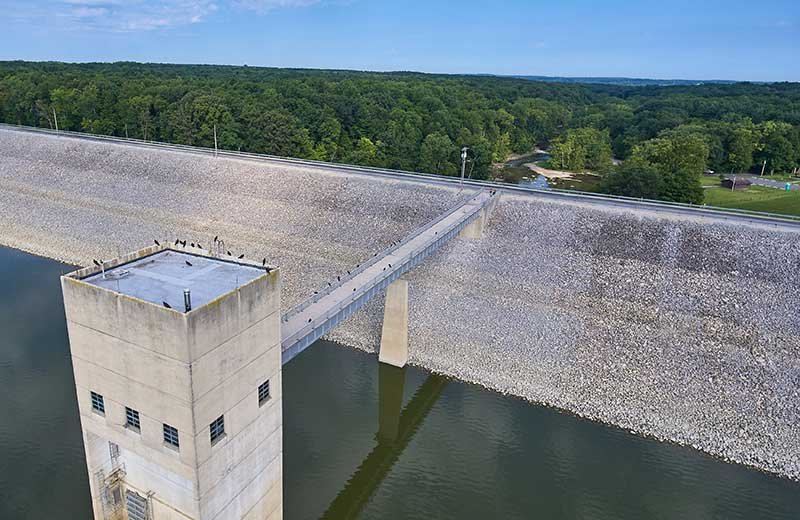
“Ideal for dams, bridges, and high-speed rail, our PAN fiber prevents shrinkage cracking and improves structural integrity.”
Project reference from product page: Jakarta-Bandung High-Speed Rail — Michem supplied alkali-resistant PAN fiber to reinforce precast track slabs, with the page reporting a 28% reduction in maintenance costs in the first 2 years.
“Used in heavy-duty factory floors and precast concrete panels, our PAN fiber enhances impact resistance and reduces post-installation cracking.”
Project reference from product page: A German automotive plant reported a 30% drop in floor repairs after switching to Michem PAN fiber.
“PAN fiber improves asphalt’s crack resistance and fatigue life, extending pavement service by 25%.”
Project reference from product page: Australian M1 Motorway expansion, where the fiber withstood extreme temperature fluctuations in the Outback.
“PAN fiber’s resistance to water and chemical corrosion makes it perfect for marine docks, flood barriers, and hydroelectric dams.”
Project reference from product page: Brazilian Amazon Hydroelectric Dam project — Michem supplied high-modulus PAN fiber to reinforce spillway concrete, designed to withstand 100+ year flood loads.
All project references are quoted from michemicals.com
Best for: Infrastructure projects demanding maximum tensile performance
The highest tensile strength in the range (≥800 MPa) combined with 98% alkali resistance makes this grade suitable for structures with 50–100+ year design lives.
Best for: Environments with extreme chemical exposure
The coated surface provides the highest alkali resistance (≥99%) in the range, ensuring fiber integrity in the most chemically aggressive environments.
Best for: Applications requiring fine dispersion and uniform distribution
The shorter cut length promotes easier mixing and more uniform dispersion in fine-aggregate systems.
Michem PAN fiber is available in standard lengths of 3 mm, 6 mm, 12 mm, and 18 mm, with custom lengths from 12 mm to 60 mm available on request.
| Length | Typical Applications |
|---|---|
| 3 mm | Fine-grained concrete, fiber cement boards, shotcrete |
| 6 mm | Thin overlays, repair mortars, skim coats |
| 12 mm | General-purpose concrete, precast elements, industrial floors |
| 18 mm | Heavy-duty concrete, bridge decks, dam structures |
| Custom (12–60 mm) | Specialized infrastructure projects per specification |
Note: The optimal fiber length depends on aggregate size, mixing equipment, and application method. Longer fibers provide better crack-bridging but may be harder to disperse uniformly. Consult Michem’s technical team for project-specific recommendations.
The Michem product page provides detailed packaging information:
| Packaging | Weight | Container Loading |
|---|---|---|
| Standard plastic bags (12 mm or thicker) | 36 kg/carton | Small container: 7.2 tons |
| Standard plastic bags (12 mm or thicker) | 36 kg/box | High-cube container: 17.28 tons |
| Packaging | Weight | Container Loading |
|---|---|---|
| Standard plastic bags (below 9 mm) | 33 kg/box | LCL container: 6.6 tons |
| Standard plastic bags (below 9 mm) | 33 kg/box | HQL container: 15.84 tons |
Source: michemicals.com
Michem Chemical Fibers Co., Ltd. is described on the product page as:
“A leading manufacturer and exporter of polyacrylonitrile (PAN) fiber with 12 years of expertise serving 50+ countries, including the USA, Brazil, Australia, and Germany.”
Key credentials from the product page: