O mecanismo de dispersão do SP630 é fundamentalmente diferente dos superplastificantes tradicionais à base de naftaleno ou melamina. A estrutura principal de éter policarboxílico proporciona dispersão de dupla ação por meio de repulsão eletrostática e impedimento estérico: a cadeia principal carregada adsorve-se às superfícies das partículas de cimento, enquanto as cadeias laterais de polietilenoóxido (PEO) enxertadas criam uma barreira física que impede a aglomeração das partículas. Essa arquitetura molecular em forma de pente proporciona uma dispersão superior em dosagens significativamente menores, superando os aditivos à base de naftaleno em aproximadamente 2 vezes na redução de água e 1,5 vez no ganho de resistência à compressão aos 28 dias. De acordo com a norma EN 934-2 (Aditivos para concreto — definições e requisitos) e a norma ASTM C494 (Aditivos químicos para concreto), o SP630 se qualifica como um aditivo redutor de água de alta eficiência, atendendo aos critérios de classificação do Tipo A (redutor de água) e do Tipo F (redutor de água de alta eficiência), respectivamente.
Para os fabricantes de argamassa pré-misturada, a implicação prática é substancial: uma redução de 35–45% na água de mistura, mantendo-se o fluxo constante, traduz-se diretamente em um ganho de 30–50% na resistência à compressão aos 28 dias ou, alternativamente, em uma redução significativa no teor de cimento para uma resistência equivalente — reduzindo tanto o custo do material quanto a pegada de carbono por unidade de argamassa produzida.
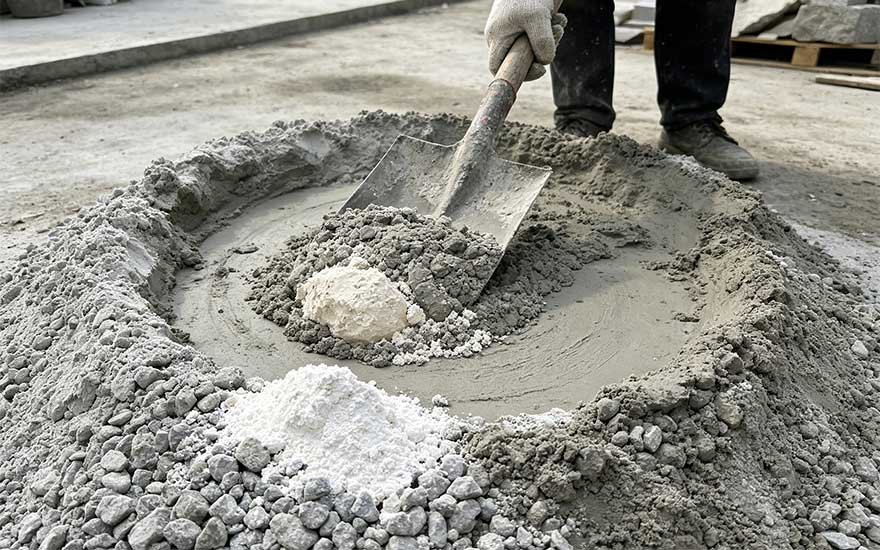
A argamassa seca representa um dos maiores segmentos de aplicação no setor de produtos químicos para a construção, abrangendo adesivos para azulejos, argamassa para alvenaria, argamassa para reparos, argamassa impermeabilizante e betonilhas. O mercado global de argamassa seca exige qualidade consistente do produto, controlada na fábrica, fornecida em sacos ou silos, em que cada grama de aditivo deve se dispersar de maneira previsível após a reconstituição com água na obra. Os aditivos líquidos — embora eficazes no concreto pré-misturado — apresentam desafios significativos na produção de misturas secas: podem causar a pré-hidratação do cimento durante o armazenamento, dificultar a homogeneidade entre os lotes e exigir equipamentos especializados de pulverização durante a produção. O pó PCE elimina totalmente esses problemas.
Para os formuladores de argamassa e operadores de usinas de mistura seca, a escolha do tipo de superplastificante influencia diretamente tanto a economia da produção quanto o desempenho em campo. O cimento Portland — o ligante cimentício mais utilizado globalmente — possui uma química de hidratação e um perfil de carga superficial bem caracterizados, que respondem de maneira ideal às moléculas de PCE com densidade específica da cadeia lateral e comprimento específico da cadeia principal. O SP630 foi desenvolvido tendo essa compatibilidade com o cimento Portland como seu principal critério de projeto. O uso de um tipo de PCE projetado para um sistema de ligante diferente (como cimento sulfoaluminato ou gesso) com cimento Portland pode resultar em rápida saturação de adsorção, redução da eficiência de dispersão ou até mesmo presa instantânea — problemas que o tipo SP630 foi especificamente formulado para evitar.
As implicações econômicas e de sustentabilidade são igualmente significativas. Como a produção de cimento é responsável por aproximadamente 7–8% das emissões globais de CO₂, qualquer aditivo que permita a redução do cimento sem comprometer a resistência contribui diretamente para uma construção com menor emissão de carbono. A capacidade de redução de água do SP630, de 35–45%, permite que os formuladores alcancem a resistência alvo com teores mais baixos de cimento ou excedam as especificações de resistência com os teores atuais de cimento — oferecendo uma alternativa comercial e ambientalmente superior aos redutores de água à base de naftaleno ou lignossulfonato, que dominam o mercado há décadas.
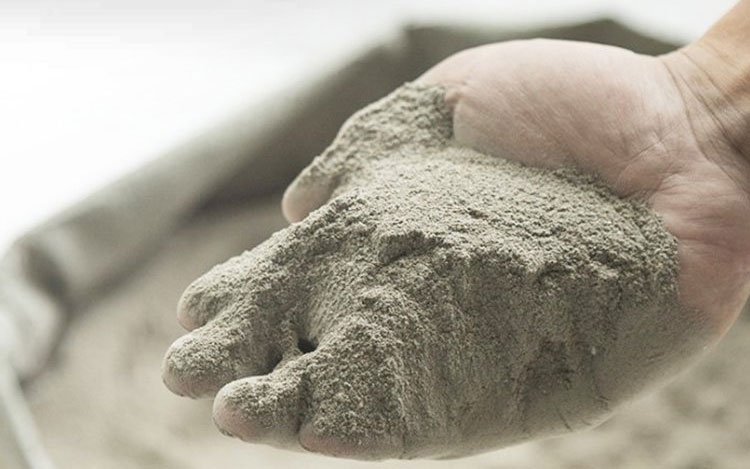
O desempenho superior do Michem PCE Powder SP630 decorre de sua arquitetura molecular do tipo pente. A molécula é composta por uma estrutura principal de éter policarboxílico carregada negativamente, com cadeias laterais de polietilenoóxido (PEO) enxertadas, de comprimento e densidade controlados. Quando introduzido em um sistema de cimento-água, dois mecanismos de dispersão simultâneos entram em ação:
Repulsão eletrostática: Os grupos carboxilatos aniônicos da cadeia principal se adsorvem aos sítios ricamente carregados de cálcio nas superfícies das partículas de cimento, particularmente nas fases de ettringita e C-S-H que se formam durante a hidratação inicial. Essa adsorção confere uma carga líquida negativa às partículas de cimento, criando uma força de repulsão eletrostática que afasta as partículas e desintegra os aglomerados. Esse mecanismo é, em princípio, comum aos superplastificantes à base de naftaleno e à base de melamina.
Impedimento estérico: As cadeias laterais de PEO enxertadas se estendem para fora da estrutura principal adsorvida, em direção à solução circundante, formando uma camada polimérica hidratada — ou “camada estérica” — ao redor de cada partícula de cimento. Quando duas partículas se aproximam, essas camadas poliméricas se sobrepõem, gerando uma força repulsiva osmótica e entrópica que impede a aproximação e a aglomeração. Esse mecanismo de impedimento estérico é exclusivo dos superplastificantes do tipo PCE e é a principal razão pela qual eles alcançam uma eficiência de dispersão significativamente maior do que os aditivos à base de naftaleno, que dependem exclusivamente da repulsão eletrostática.
A combinação desses dois mecanismos é o que permite que o SP630 alcance uma redução de água de 35–45% — aproximadamente o dobro da redução de água dos superplastificantes à base de naftaleno — com uma fração da dosagem. Na validação em campo de formulações de argamassa pré-misturada à base de cimento Portland, o SP630, na dosagem de 0,31 TP3T, atingiu valores de fluidez equivalentes aos das misturas de controle com dosagem de 0,6 a 0,81 TP3T de superplastificantes à base de naftaleno, ao mesmo tempo em que proporcionou um ganho de resistência à compressão aos 28 dias 1,5 vezes maior.
O cimento de Portland — composto principalmente por C₃S, C₂S, C₃A e C₄AF — apresenta uma química superficial complexa e dinâmica durante a hidratação. A fase C₃A se hidrata rapidamente, formando ettringita na presença de gesso, e cria uma grande área superficial que adsorve intensamente as moléculas de PCE. Se a estrutura molecular do PCE não for otimizada para esse comportamento de adsorção, o aditivo é consumido pela fase C₃A antes que possa dispersar efetivamente as fases C₃S e C₂S, que determinam o desenvolvimento da resistência.
O projeto molecular do SP630 supera esse desafio por meio do controle da densidade das cadeias laterais e da densidade de carga da estrutura principal, o que equilibra a adsorção em todas as fases do cimento. O resultado é uma dispersão uniforme de toda a distribuição das partículas de cimento — e não uma dispersão seletiva apenas das fases de hidratação precoce. Testes em campo, realizados de acordo com os protocolos EN/ASTM, confirmam que a argamassa de cimento Portland formulada com SP630 na dosagem de 0,2% atinge uma espalhabilidade na mesa de fluxo de 180–200 mm, conforme a norma EN 1015-3 (Consistência da argamassa fresca — ensaio na mesa de fluxo) com uma relação água-cimento 35–45% inferior à de uma mistura de controle sem superplastificante.
A relação entre a redução da água e o aumento da resistência à compressão em sistemas de cimento Portland segue uma correlação inversa bem estabelecida com a relação água-cimento. Ao reduzir a água de mistura necessária para atingir a consistência desejada, o SP630 diminui a relação água-cimento, o que aumenta diretamente a densidade e a resistência da pasta de cimento endurecida.
Dosagem do SP630 (% sem água) | Redução de água (%) | Redução da relação w/c | 28d Ganho de resistência à compressão (%) |
0.1 | 25-30 | 0,50 → 0,37 | 30–35 |
0.2 | 30–38 | 0,50 → 0,32 | 35–45 |
0.3 | 35-42 | 0,50 → 0,29 | 40–48 |
0.5 | 40–45 | 0,50 → 0,28 | 45–50 |
Nota: Os dados são meramente indicativos, com base em argamassa de cimento Portland (CEM I 42,5) com relação água/cimento (w/c) de referência igual a 0,50. Os resultados reais variam de acordo com a mineralogia do cimento, a granulometria dos agregados e as condições ambientais. Ganho de resistência conforme a norma ASTM C109.
De acordo com a experiência de nossa Equipe de Aplicações Técnicas, a dosagem ideal para a maioria das aplicações de argamassa pré-misturada à base de cimento Portland situa-se no intervalo de 0,2 a 0,31 TP3T, onde a curva de redução de água atinge sua inclinação mais acentuada antes de se aproximar da região de platô. Acima de 0,3–0,51 TP3T, observa-se normalmente um retorno decrescente na redução de água, e uma dosagem excessiva pode causar retardamento da presa ou incorporação de ar.
O formato em pó do SP630 — com teor de sólidos ≥90% e teor de umidade ≤5% — oferece vantagens específicas na produção de argamassas de mistura a seco:
Propriedade | Especificações do pó Michem PCE |
Marca | Michem |
Produto | Superplastificante de policarboxilato (PCE) em pó |
Grau | SP630 (para argamassa pré-misturada à base de cimento Portland e concreto) |
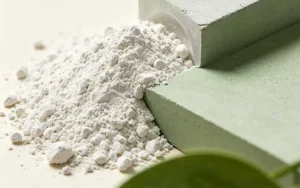
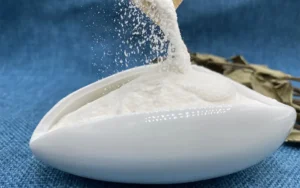
Aparência | Pó branco a amarelo claro |
Composição | Éter policarboxílico |
Conteúdo sólido | ≥90% |
Teor de umidade | ≤5% |
Taxa de redução de água | >25% (faixa alta: 35–45%) |
Dosagem recomendada | 0,1–0,51 TP3T em peso do material cimentício |
Ganho de resistência à compressão (28d) | 30–50% |
Prazo de validade | 2 anos |
Classificação de transporte | UN 3077 (não perigoso para transporte) |
Tipos disponíveis | Redutor de água em pó de alta performance, ecológico com baixo teor de COV, de presa rápida |
Desempenho em comparação com o naftaleno | Redução de água em 2×, aumento da resistência em 1,5× |
Fonte: Especificações técnicas oficiais da Michem (michemicals.com).
Aplicativo | Tipo de cimento | Vazão alvo (EN 1015-3) | Dosagem do SP630 | Semana de referência | Concluído na semana de |
Adesivo para azulejos (C1) | CEM I 42,5 | 140–160 mm | 0.15–0.20% | 0.45 | 0.28–0.32 |
Adesivo para azulejos (C2) | CEM I 52,5 | 150–170 mm | 0.20–0.30% | 0.40 | 0.22–0.26 |
Argamassa para alvenaria (M5–M15) | CEM I 42,5 | 160–180 mm | 0.10–0.15% | 0.55 | 0.38–0.42 |
Argamassa de reparo | CEM I 52,5 | 170–190 mm | 0.25–0.35% | 0.40 | 0.22–0.26 |
Argamassa impermeabilizante | CEM I 42,5 | 160–180 mm | 0.20–0.30% | 0.45 | 0.25–0.30 |
Camada de nivelamento do piso (CT-C30-F4) | CEM I 42,5 | 140–160 mm | 0.15–0.25% | 0.50 | 0.28–0.35 |
Etapa | Ação | Detalhes |
1 | Inspeção de matérias-primas | Verifique a aparência do pó SP630 (branco a amarelo claro), umidade ≤5% |
2 | Secagem de areia | Reduzir a umidade da areia para <0,5% antes da mistura |
3 | Pré-mistura | Misture areia e cimento por 2 a 3 minutos em uma betoneira de alta intensidade |
4 | Adição de aditivo | Adicione o pó SP630 junto com outros aditivos secos (HPMC, RDP, etc.) |
5 | Mistura final | Bata por 3 a 5 minutos até obter uma cor e uma textura homogêneas |
6 | Verificação de qualidade | Amostragem e fluxo de ensaio conforme a norma EN 1015-3; verificar a relação água/cimento |
7 | Embalagem | Embale em sacos à prova de umidade ou silos; sele para manter a umidade ≤5% |
O SP630 é totalmente compatível com aditivos padrão para argamassas pré-misturadas. Ao formular sistemas com múltiplos aditivos, adicione o SP630 juntamente com éteres de celulose (Michem HPMC) para retenção de água, MikaVAE® RDP para flexibilidade e adesão e fibras TenaBrix® PP para controle de fissuras. A ordem de adição na mistura seca não afeta o desempenho do SP630, pois o pó se dispersa com a adição de água durante a mistura na obra.
Verificar | Método | Critério de aceitação |
Aparência do pó | Visual | Branco a amarelo claro, de consistência fluida |
Consistência do fluxo | Tabela de fluxo da norma EN 1015-3 | Dentro de ±10 mm do alvo |
Redução do consumo de água | Comparar o grupo experimental com o grupo controle com vazão igual | Redução ≥25% |
Tempo de presa | EN 480-2 (Vicat) | Sem atraso excessivo (<120 min de atraso) |
Resistência à compressão 28d | ASTM C109 / EN 1015-11 | Ganhos ≥30% em relação ao grupo de controle com vazão igual |
Teor de ar | EN 1015-7 | ≤5% (a menos que seja um projeto com ar incorporado) |