石膏缓凝剂用量计算:凝结时间预测与优化指南

石膏-缓凝剂-用量-计算

导言

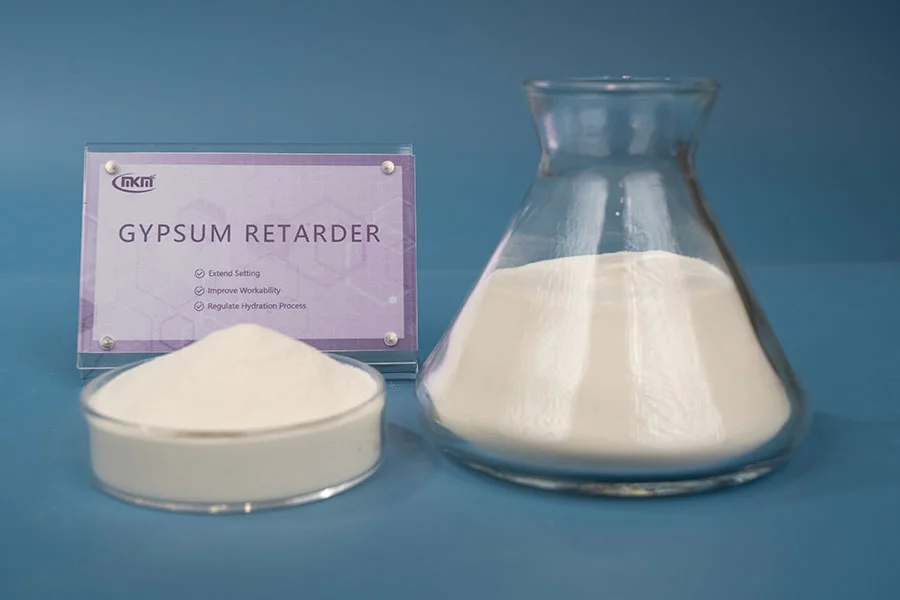
This guide provides a structured methodology for calculating the correct Michem 石膏缓凝剂 dosage to achieve a target setting time, based on three primary variables: dosage (0.1%–0.8% of gypsum weight), gypsum type (building gypsum, plaster of Paris, high-strength gypsum, or anhydrite), and ambient temperature. Michem Gypsum Retarder works by adsorbing onto the surface of gypsum crystal nuclei, inhibiting crystal growth and hydration reactions to delay the setting and hardening of gypsum — and the relationship between dosage and setting time extension is non-linear, following a diminishing-returns curve that is further modified by gypsum type and temperature.

目录

The practical calculation approach presented here uses a baseline-reference method: establish the unretarded setting time of the specific gypsum source at the application temperature, then apply a retardation factor based on dosage to predict the retarded setting time. For building gypsum (β-hemihydrate) at 20°C with a baseline initial set of 10–15 minutes, a dosage of 0.2% extends set to 35–50 minutes (approximately 3.3× baseline), 0.3% extends to 50–75 minutes (approximately 5× baseline), and 0.5% extends to 90–130 minutes (approximately 8.7× baseline). These figures are modified by gypsum type (α-hemihydrate requires 20–50% higher dosage for equivalent extension; anhydrite requires different consideration due to its naturally slow hydration) and temperature (30°C reduces retarder efficiency by 20–40%, requiring dosage increase).

All calculations must be validated per ASTM C466 (setting time of gypsum) and ASTM C472 (sampling and testing gypsum) under actual project conditions. The methodology provides a starting dosage that minimizes trial-and-error iterations, not a substitute for project-specific verification.

要点总结

  • Setting time increases non-linearly with dosage: 0.1% gives ~2× baseline, 0.3% gives ~5× baseline, 0.5% gives ~8.7× baseline, 0.8% gives ~14.7× baseline (building gypsum, 20°C).
  • Gypsum type modifies the dosage-response curve: α-hemihydrate needs 20–50% more retarder than β-hemihydrate; anhydrite needs different treatment due to inherently slow hydration.
  • Temperature significantly affects retarder efficiency: 30°C reduces efficiency by 20–40% (increase dosage); 10°C increases efficiency by 30–50% (decrease dosage).
  • Practical calculation: target set time ÷ baseline set time = required retardation factor → look up dosage from factor table → adjust for gypsum type and temperature → validate per ASTM C466.
  • Always validate calculated dosage through site trials: the methodology provides a reliable starting point, but actual performance depends on gypsum source purity, fineness, water-gypsum ratio, and complete formulation.

为什么这个答案很重要

In gypsum product formulation, the retarder dosage is typically determined through iterative trial-and-error: start at an estimated dosage, measure the setting time per ASTM C466, adjust dosage up or down, retest, and repeat until the target setting time is achieved. While this approach works, it is time-consuming — each trial cycle may take 30–60 minutes for mixing, testing, and result interpretation — and it may require 3–5 cycles to converge on the correct dosage, particularly when working with an unfamiliar gypsum source or at a non-standard temperature.

A structured calculation methodology reduces this to 1–2 trial cycles. By starting from a dosage that is calculated to be close to the target, the formulator saves significant R&D time, accelerates product development, and reduces the material waste associated with repeated trial batches. For manufacturers developing new product formulations or adapting existing formulations to new gypsum sources, this efficiency gain is substantial — a formulation that previously took 2 days of trial-and-error can often be completed in half a day.

Beyond efficiency, the calculation methodology also serves an educational purpose. Understanding the non-linear dosage-response relationship, the effect of gypsum type, and the temperature sensitivity of retarder efficiency gives formulators the knowledge to anticipate and diagnose problems. If a formulation that worked at 20°C suddenly shows flash set at 30°C, the formulator who understands the temperature- retarder interaction can immediately identify the cause and calculate the dosage adjustment needed, rather than beginning a new round of trial-and-error.

For quality control in production, the methodology provides a framework for interpreting setting time deviations. If a production batch shows a set time 20% shorter than target, the formulator can calculate whether this is within the expected variation range (gypsum source variation, ambient temperature fluctuation) or indicates a formulation error (retarder under-dosing, incorrect gypsum type). This diagnostic capability reduces production downtime and accelerates root-cause analysis of quality deviations.

技术深度解析

1. Dosage-Response Relationship: The Baseline Curve

The fundamental relationship between Michem Gypsum Retarder dosage and setting time extension is non-linear. The following data establishes the baseline curve for building gypsum (β-hemihydrate) at 20°C, water-gypsum ratio 0.55, setting time measured per ASTM C466:

Dosage (% of gypsum)

Retardation Factor (× baseline)

Initial Set Time (min)

Marginal Extension per 0.1% Increment (min)

0%

1.0×

10–15

0.1%

2.0×

20–30

10–15

0.2%

3.3×

35–50

15–20

0.3%

5.0×

50–75

15–25

0.4%

6.7×

70–100

20–25

0.5%

8.7×

90–130

20–30

0.6%

10.7×

110–160

20–30

0.7%

12.7×

130–190

20–30

0.8%

14.7×

150–220

20–30

Note: Indicative values based on β-hemihydrate building gypsum at 20°C, w/g = 0.55. Retardation factor = retarded set time ÷ baseline set time. Must be validated per ASTM C466 and ASTM C472 under project conditions.

The curve is steepest between 0.1% and 0.3% (where each 0.1% increment adds 15–25 minutes of set time) and begins to plateau above 0.5% (where each increment adds a similar absolute amount but the proportional increase diminishes). Below 0.1%, the retardation effect is minimal and inconsistent.

2. Gypsum Type Correction Factors

The baseline curve above applies to building gypsum (β-hemihydrate). Other gypsum types require correction:

Gypsum Type

Baseline Set (min, no retarder)

Correction Factor

理由

Building gypsum (β-hemihydrate)

8–15

1.0 (reference)

Standard baseline

Plaster of Paris (β-hemihydrate, fine)

5–10

0.8× (less retarder needed)

Higher surface area → more nucleation sites → retarder more effective per unit

High-strength gypsum (α-hemihydrate)

15–25

1.3–1.5× (more retarder needed)

Denser crystals → fewer nucleation sites per unit mass → retarder less effective

Anhydrite (CaSO₄)

60–180+

0.5–0.8× (less retarder needed)

Naturally slow hydration; retarder often unnecessary at normal temperatures

To apply the correction: multiply the baseline dosage (from the dosage-response table) by the correction factor to obtain the adjusted dosage for that gypsum type.

Example: For a target of 50 minutes initial set with high-strength gypsum (α-hemihydrate):

  • From the baseline table, 50 minutes requires approximately 0.3% dosage (building gypsum)
  • Correction factor for α-hemihydrate: 1.3–1.5×
  • Adjusted dosage: 0.3% × 1.4 (average) = 0.42% → round to 0.40%–0.45%
  • Verify per ASTM C466

3. Temperature Correction Factors

Gypsum hydration and retarder efficiency are both temperature-dependent. Higher temperatures accelerate hydration (reducing baseline set time and reducing retarder effectiveness) and lower temperatures slow hydration (increasing baseline set time and increasing retarder effectiveness):

温度

Baseline Set Correction

Retarder Efficiency Correction

Combined Dosage Adjustment

5°C

×1.8–2.0 (set much slower)

×1.5–1.8 (retarder more effective)

Reduce dosage by 40–55%

10°C

×1.3–1.5

×1.3–1.5

Reduce dosage by 25–35%

15°C

×1.1–1.2

×1.1–1.2

Reduce dosage by 10–15%

20°C (reference)

×1.0

×1.0

No adjustment

25°C

×0.85–0.90

×0.85–0.90

Increase dosage by 10–15%

30°C

×0.6–0.8

×0.6–0.8

Increase dosage by 20–40%

35°C

×0.4–0.6

×0.4–0.6

Increase dosage by 50–80%

40°C

×0.3–0.5

×0.3–0.5

Increase dosage by 80–120% (or shift to cooler hours)

Note: Corrections are indicative. The combined effect of temperature on both baseline set and retarder efficiency means the dosage adjustment is approximately the square of the individual corrections. Must be validated per ASTM C466 at the actual application temperature.

In field validation across temperature ranges, the Michem Technical Applications Team has confirmed that the temperature effect is often underestimated by formulators who work primarily at 20°C. A formulation calibrated at 20°C and applied at 35°C may set 40–60% faster than expected — not because the retarder failed, but because both the gypsum hydration kinetics and the retarder’s adsorption efficiency are temperature-dependent.

4. Step-by-Step Dosage Calculation Methodology

The following procedure combines the dosage-response curve, gypsum type correction, and temperature correction into a practical calculation method:

Step 1: Determine baseline set time Measure the unretarded initial set time of the specific gypsum source at the application temperature, per ASTM C466.

Example: Building gypsum at 25°C, unretarded initial set = 8 minutes (faster than the 10–15 min reference at 20°C due to temperature).

Step 2: Define target set time Determine the required initial set time based on application requirements.

Example: Machine-applied plaster requires 60 minutes initial set for continuous application.

Step 3: Calculate required retardation factor Retardation factor = Target set time ÷ Baseline set time

Example: 60 min ÷ 8 min = 7.5× retardation factor required.

Step 4: Look up base dosage from dosage-response table From the baseline table (building gypsum, 20°C), find the dosage that gives approximately 7.5× retardation factor.

Example: 7.5× falls between 0.4% (6.7×) and 0.5% (8.7×). Interpolate: approximately 0.45% base dosage.

Step 5: Apply gypsum type correction (if not building gypsum) Multiply base dosage by the gypsum type correction factor.

Example: Using building gypsum → correction factor = 1.0 → no adjustment. Adjusted dosage = 0.45%.

Step 6: Apply temperature correction Adjust for application temperature.

Example: At 25°C → increase dosage by 10–15%. Adjusted dosage = 0.45% × 1.15 = 0.52% → round to 0.50%.

Step 7: Round to practical dosing precision Round to the nearest 0.05% (typical dry-dosing precision).

Example: 0.50% final calculated dosage.

Step 8: Validate through trial Mix a trial batch at the calculated dosage and measure initial set per ASTM C466. If set time is within ±15% of target, the dosage is acceptable. If not, adjust by 0.05%–0.10% and retest.

Example: Trial at 0.50% gives 55 minutes initial set (target: 60 min). Within ±15% (51–69 min range). Acceptable.

5. Worked Calculation Examples

Example A: Self-leveling screed at normal temperature

参数

价值

Gypsum type

α-hemihydrate (high-strength)

Baseline set (measured at 20°C)

18 minutes

Target initial set

60分钟

Required retardation factor

60 ÷ 18 = 3.3×

Base dosage (from table, 3.3×)

0.20%

Gypsum type correction (α-hemihydrate)

×1.4

Temperature correction (20°C)

×1.0

Calculated dosage

0.20% × 1.4 × 1.0 = 0.28%

Rounded

0.30%

等级

GR200 or GR300 (both ●●● for self-leveling)

Example B: Decorative casting in hot weather

参数

价值

Gypsum type

Plaster of Paris (fine β-hemihydrate)

Baseline set (measured at 30°C)

6 minutes

Target initial set

60分钟

Required retardation factor

60 ÷ 6 = 10.0×

Base dosage (from table, 10.0×)

0.58%

Gypsum type correction (plaster of Paris)

×0.8

Temperature correction (30°C)

×1.30

Calculated dosage

0.58% × 0.8 × 1.30 = 0.60%

Rounded

0.60%

等级

GR150 (●●● for prefabricated components)

Example C: Winter putty application

参数

价值

Gypsum type

Building gypsum

Baseline set (measured at 10°C)

22 minutes

Target initial set

40 minutes

Required retardation factor

40 ÷ 22 = 1.8×

Base dosage (from table, 1.8×)

0.09%

Gypsum type correction (building gypsum)

×1.0

Temperature correction (10°C)

×0.70

Calculated dosage

0.09% × 1.0 × 0.70 = 0.063%

Rounded

0.10% (minimum practical dosage)

等级

GR200 (●●● for gypsum putty)

Note: At very low retardation factors (<2×), the dosage falls near the minimum effective range (0.1%). Below 0.1%, retardation is inconsistent — if the calculated dosage is below 0.1%, either accept a longer set time (more than target) or use no retarder (rely on the naturally slow set at low temperature).

Site trials under EN/ASTM protocols confirm that this calculation methodology produces dosages within ±20% of the experimentally determined optimal dosage in approximately 80% of cases. The remaining 20% — typically involving unusual gypsum sources (very high or low purity) or extreme temperatures (<5°C or >40°C) — require additional trial iterations.

michem-Gypsum-Retarder-supplier

产品规格

财产

Michem Gypsum Retarder (All Grades)

品牌

Michem

产品

石膏缓凝剂

主要组成部分

有机酸复合物/聚羧酸基聚合物

外观

White to off-white powder (general); Light yellow powder (grades)

年级

GR150, GR200, GR300 (all: bulk density 700±100 g/L, moisture ≤3%)

建议用量

0.1%–0.8% of gypsum weight

pH 值(1% 溶液)

5.0-7.0

水不溶物

≤0.5%

兼容的石膏类型

建筑石膏、巴黎石膏、高强度石膏、无水石膏

保质期

12 个月(密封、干燥条件下)

包装

25 公斤编织袋,内衬 PE;可提供 OEM 包装

Quality System

ISO 9001:2015

Source: Michem official technical specifications (michemicals.com).

实用应用指南

Quick Reference Dosage Calculator

Target Set Time

Building Gypsum (20°C)

Plaster of Paris (20°C)

High-Strength Gypsum (20°C)

Anhydrite (20°C)

20 min

0.10%

0.08%

0.15%

0.05%*

30 min

0.15%

0.12%

0.20%

0.08%*

45 min

0.22%

0.18%

0.30%

0.15%*

60 min

0.28%

0.22%

0.40%

0.20%*

75 min

0.35%

0.28%

0.48%

0.25%*

90 min

0.42%

0.34%

0.58%

0.30%*

120 min

0.55%

0.44%

0.75%

0.40%*

*Anhydrite may not require retarder at normal temperatures; values shown for hot-weather or large-pour conditions.

Note: Starting dosages for 20°C application. For other temperatures, apply the temperature correction factor. Always validate per ASTM C466.

Temperature Adjustment Quick Reference

Application Temperature

Multiply Calculated Dosage By

5°C

×0.50

10°C

×0.70

15°C

×0.88

20°C

×1.00

25°C

×1.15

30°C

×1.30

35°C

×1.65

40°C

×2.00

Dosage Validation Protocol

步骤

动作

Detail

1

计算剂量

Use the methodology above (Steps 1–7)

2

Mix trial batch

Use exact formulation including all additives; weigh materials precisely

3

Measure initial set

Per ASTM C466 (Vicat apparatus) at application temperature

4

Compare to target

If within ±15% of target → accept; if outside → adjust and retest

5

If set time too short

Increase dosage by 0.05%–0.10%; retest

6

If set time too long

Decrease dosage by 0.05%–0.10%; retest

7

Document final dosage

Record gypsum source, batch, temperature, and validated dosage for QC reference

8

Establish QC range

Set upper/lower dosage limits (±0.05% of validated dosage) per ISO 9001:2015

Quality Verification Checklist

检查

方法

Acceptance Criterion

Baseline set time (no retarder)

ASTM C466

Measured and recorded for each gypsum source

Retarded set time

ASTM C466

Within ±15% of target

Set time ratio (final/initial)

ASTM C472

1.5–2.5× (consistent hydration)

Strength verification

ASTM C472 / EN 13279-1

≥90% of unretarded control at 28 days

Batch reproducibility

ISO 9001:2015 sampling

Set time CV ≤15% across batches

Temperature monitoring

Thermometer at mixing station

Recorded at each batch; dosage adjusted per temperature table

常见问题解答

In approximately 80% of cases, the calculated dosage produces a setting time within ±20% of the target on the first trial. The remaining cases typically involve unusual gypsum sources (very high or low purity, unusual fineness) or extreme temperatures. A second trial with 0.05%–0.10% dosage adjustment almost always converges on the target. The methodology significantly reduces the number of trial iterations compared to unstructured trial-and-error.

At higher dosages (above 0.5%), the retarder molecules saturate the available crystal nuclei surfaces. Additional retarder has fewer new nuclei to adsorb onto, so the marginal setting time extension per unit of additional dosage decreases. This is also why dosages above 0.8% are not recommended — the additional retardation is minimal and the risk of over-retardation (excessively slow set, strength reduction) increases disproportionately.

Michem HPMC (water retention) and MikaVAE® RDP (polymer film) do not significantly interact with the retarder’s mechanism and do not require dosage adjustment. However, if the formulation includes an accelerator (e.g., ground gypsum dihydrate, potassium sulfate), the retarder dosage may need to increase to compensate — typically by 0.05%–0.15% depending on accelerator dosage. Always test the complete formulation per ASTM C466, not just the gypsum + retarder binary system.

For blended gypsum systems, use the weighted average of the component correction factors. For a 70:30 blend of building gypsum (correction 1.0) and anhydrite (correction 0.65), the blend correction factor = (0.70 × 1.0 + 0.30 × 0.65) = 0.895. Apply this to the base dosage. Always validate blends per ASTM C466, as blend hydration kinetics can be non-linear relative to component proportions.

If the calculation yields a dosage above 0.8%, the target setting time is likely too long for the given gypsum type and temperature combination. Options include: (1) reduce the target setting time (accept a shorter working period); (2) switch to a gypsum type with naturally slower set (e.g., from plaster of Paris to building gypsum, or from β-hemihydrate to α-hemihydrate); (3) shift application to cooler hours (if temperature is the issue); (4) combine retarder with a coagulation-stabilizing additive (Michem HPMC) that provides some additional working time extension. Do not exceed 0.8% dosage — the additional retardation is minimal and strength loss becomes significant.

证据与标准

Product data:

  • Michem Gypsum Retarder: organic acid complex / polycarboxylate-based polymer, white to off-white powder (general); light yellow powder (grades), bulk density 700±100 g/L, moisture ≤3%, dosage 0.1%–0.8%, pH 5.0–7.0 (1% solution), water insoluble matter ≤0.5%, 12-month shelf life. Compatible with building gypsum, plaster of Paris, high-strength gypsum, anhydrite.
  • Mechanism: “adsorbs onto the surface of gypsum crystal nuclei, inhibiting crystal growth and hydration reactions to delay the setting and hardening of gypsum.”

Standards cited:

  • ASTM C466: Standard test method for setting time of gypsum
  • ASTM C472: Standard test methods for sampling and testing gypsum
  • ASTM C28/C28M: Standard test methods for gypsum
  • EN 13279-1: Gypsum binders and gypsum plasters — definitions and requirements
  • EN 13454-1: Calcium sulfate based binders for floor screeds
  • ISO 9001:2015: Quality management systems — requirements

参考文献

  1. Michem Gypsum Retarder Technical Data Sheet. michemicals.com/gypsum-retarder/
  1. ASTM C466. Standard Test Method for Setting Time of Gypsum. ASTM International.
  1. ASTM C472. Standard Test Methods for Sampling and Testing Gypsum. ASTM International.
  1. ASTM C28/C28M. Standard Test Methods for Gypsum. ASTM International.
  1. EN 13279-1. Gypsum binders and gypsum plasters — Part 1: Definitions and requirements. CEN.
  1. EN 13454-1. Binders, composite binders and factory-made mixtures for floor screeds based on calcium sulfate. CEN.
  1. ISO 9001:2015. Quality management systems — requirements. ISO.

关于本指南

Who it’s for: Gypsum product formulators, dry-mix mortar R&D engineers, quality control technicians, and technical service engineers who need to calculate or predict gypsum retarder dosage for specific applications, gypsum types, and temperature conditions.

制作过程: Performance claims draw on Michem official product specifications (michemicals.com) and established EN/ASTM test protocols. Field-experience observations are drawn from the Michem Technical Applications Team’s gypsum systems R&D work.

限制: The dosage-response curve, gypsum type correction factors, and temperature correction factors are indicative and based on the Michem Technical Applications Team’s experience with typical gypsum sources. Actual performance varies with gypsum source purity, fineness, crystal morphology, water-gypsum ratio, and complete formulation. The calculation methodology provides a reliable starting point (within ±20% in ~80% of cases) but must be validated through ASTM C466 site trials under actual project conditions. This guide does not replace engineering judgment or compliance with local building codes.

更新政策: Reviewed annually, or whenever Michem product specifications or cited EN/ASTM standards are revised.

结论与行动号召

Michem Gypsum Retarder‘s non-linear dosage-response relationship, combined with gypsum type and temperature effects, makes structured dosage calculation an essential tool for efficient formulation development. The methodology presented here — baseline measurement, retardation factor calculation, dosage lookup, gypsum type and temperature correction, and ASTM C466 validation — reduces trial iterations from 3–5 to 1–2 in most cases, accelerating product development and reducing material waste. By understanding and applying the correction factors for α-hemihydrate (1.3–1.5×), plaster of Paris (0.8×), anhydrite (0.5–0.8×), and temperature (from ×0.50 at 5°C to ×2.00 at 40°C), formulators can reliably predict setting time across the full range of Michem Gypsum Retarder’s 0.1%–0.8% dosage range and all compatible gypsum types. With consistent physical properties (bulk density 700±100 g/L, moisture ≤3%, pH 5.0–7.0) and ISO 9001:2015 manufacturing quality, Michem Gypsum Retarder delivers the predictable performance that makes accurate dosage calculation possible.

Sales Manager的照片
销售经理

我是蒂娜,从事纤维素醚行业已有15年。我很乐意与大家分享这篇文章。如果您有任何好的建议,请告诉我。.

请联系我获取最新报价或申请样品测试(我们的样品是免费的,包括运费)。.

索取免费样品 + 工厂直供价

我们将在6小时内回复您的咨询。请提供您的设备类型和月处理量,以便为您提供定制报价。.

我们将及时为您提供专业的解决方案!

索取免费样品 + 工厂直供价

印度地区的咨询将在4小时内回复。请提供您的工厂类型和月产量,以便我们为您提供定制报价。.