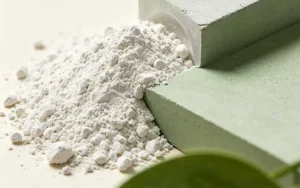
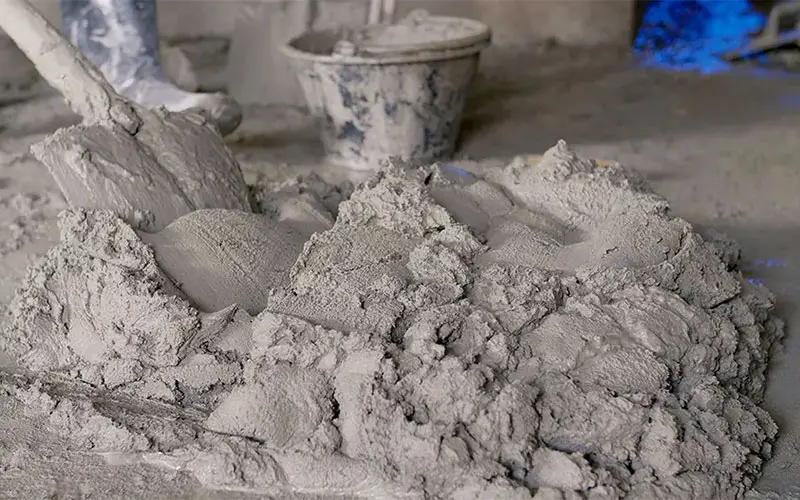
CMC (natri carboxymethyl cellulose) giúp kéo dài thời hạn sử dụng của vữa trộn khô từ 6–9 tháng lên 12–18 tháng khi được bổ sung với liều lượng 0,1–0,3%. Sự kéo dài này diễn ra thông qua hai cơ chế liên quan chặt chẽ với nhau: khả năng đệm độ ẩm nhờ các nhóm carboxymethyl anion (DS 0,65–0,9) và khả năng chống vón cục nhờ lớp màng polymer bôi trơn các hạt bột.
Các nhóm thế carboxymethyl (–CH₂COO⁻) của CMC tạo ra một “bể chứa độ ẩm” ưu tiên bên trong vữa đóng gói — độ ẩm xâm nhập sẽ liên kết tĩnh điện với lớp vỏ thủy hóa của CMC thay vì kích hoạt quá trình thủy hóa xi măng sớm. Mỗi gam CMC hấp thụ lượng nước tương đương 30–50% trọng lượng của chính nó ở trạng thái cân bằng, hoạt động như một chất đệm có thể đảo ngược. Đồng thời, chuỗi chính cellulose tạo thành một lớp màng bôi trơn mỏng trên bề mặt các hạt, làm giảm sự tiếp xúc giữa các hạt và ức chế sự hình thành cầu kết tinh gây ra hiện tượng vón cục.
DS quy định các giới hạn về hiệu suất: DS 0.65 mang lại khả năng giữ nước ở mức vừa phải cho điều kiện bảo quản ở vùng ôn đới (độ ẩm tương đối 40–60%); DS 0.9 mang lại khả năng ngăn chặn độ ẩm mạnh hơn cho điều kiện phân phối ở vùng nhiệt đới (độ ẩm tương đối 70–85%). Ở cả hai mức này, vữa vẫn giữ được tính chảy tự do, đồng nhất và phản ứng hoàn toàn sau thời gian lưu trữ kéo dài, được xác nhận thông qua thử nghiệm độ nhất quán trên bàn chảy theo tiêu chuẩn EN 1015-3.
Thời hạn sử dụng quyết định phạm vi phân phối của các nhà sản xuất vữa trộn khô. Một sản phẩm bị suy giảm chất lượng sau 6 tháng sẽ không thể đáp ứng nhu cầu của các nhà phân phối khu vực cần có lượng hàng tồn kho dự phòng từ 9–12 tháng, cũng như các thị trường xuất khẩu nơi thời gian vận chuyển kéo dài thêm 2–4 tháng. Mỗi tháng tuổi thọ sản phẩm tăng thêm sẽ mở rộng phạm vi thị trường và giảm thiểu lãng phí do hết hạn sử dụng — thông thường là 3–5% về khối lượng với tuổi thọ 6 tháng so với dưới 1% khi tuổi thọ là 18 tháng.
Lý do kinh tế cũng không kém phần thuyết phục. Hiện tượng vón cục và suy giảm chất lượng do độ ẩm buộc phải thu hồi sản phẩm, tái chế và gây tổn hại đến thương hiệu — chỉ một lô hàng bị lỗi cũng có thể gây thiệt hại 15.000–50.000. CMC ở mức 0,1–0,3% tương đương khoảng 0,80–2,40 cho mỗi tấn vữa — khoản đầu tư này sẽ thu hồi vốn ngay từ lần đầu tiên một pallet tránh được tình trạng hết hạn sử dụng. Với sản lượng hàng chục nghìn tấn mỗi năm, việc kéo dài thời hạn sử dụng đồng nghĩa với việc giảm thiểu gián đoạn, mở rộng khả năng tiếp cận thị trường và đảm bảo hiệu suất ổn định cho người dùng cuối.
Quá trình vón cục trong vữa trộn khô diễn ra theo một trình tự có thể dự đoán được: độ ẩm môi trường xâm nhập vào bao bì → độ ẩm được hấp phụ lên bề mặt các hạt xi măng và chất độn → quá trình thủy hóa một phần kích hoạt sự hình thành các cầu kết tinh giữa các hạt liền kề → các cầu này củng cố thành các khối kết tụ cứng → bột mất đi tính chảy và tính đồng nhất của mẻ vữa. CMC ngăn chặn quá trình này ngay từ giai đoạn hấp phụ, trước khi quá trình thủy hóa xi măng không thể đảo ngược bắt đầu.
Khi CMC phân tán trong quá trình trộn khô, các chuỗi polymer dạng sợi của nó phân bố trên bề mặt các hạt nhờ lực bám dính van der Waals. Mỗi đơn vị anhydroglucose đều có các nhóm thế carboxymethyl (–CH₂COO⁻), trong đó các nhóm carboxylate mang điện tích âm thu hút các lưỡng cực nước thông qua lực tĩnh điện. Điều này tạo ra một “bể chứa độ ẩm ưu tiên” — độ ẩm được giữ lại bởi lớp vỏ ngậm nước của CMC thay vì bề mặt phản ứng của xi măng. Điều quan trọng là, nước bị giữ lại vẫn có thể đảo ngược: nó không kích hoạt quá trình thủy hóa xi măng và có thể giải phóng khi độ ẩm tương đối (RH) môi trường giảm, khiến CMC trở thành một chất đệm động.
Trong các thử nghiệm bảo quản gia tốc đối với vữa trộn khô đóng bao ở nhiệt độ 40°C và độ ẩm tương đối 85% RH, các công thức có chứa 0,2% Michem CMC (DS 0,85) vẫn duy trì được tính nhất quán của bột chảy tự do sau 16 tuần — tương đương với khoảng 18 tháng trong điều kiện kho hàng thông thường (25°C, độ ẩm tương đối 60%) — trong khi các lô đối chứng không được điều chỉnh đã xuất hiện hiện tượng vón cục có thể đo lường được vào tuần thứ 6 (tương đương khoảng 7 tháng). Kết quả này chứng minh hiệu quả của CMC như một chất ngăn chặn độ ẩm trong các điều kiện cố tình gây áp lực lên khả năng cách ly của bao bì.
Ngoài khả năng giữ ẩm, CMC còn có tác dụng chống vón cục về mặt vật lý nhờ khả năng bôi trơn bề mặt. Các chuỗi polymer tạo thành một lớp màng mỏng — thường có độ dày khoảng 10–50 nm tùy thuộc vào chất lượng phân tán — bao phủ từng hạt bột riêng lẻ. Lớp màng này thực hiện đồng thời hai chức năng:
Kết quả thử nghiệm chống vón cục theo tiêu chuẩn EN 1015-2 xác nhận rằng các mẫu vữa có chứa Michem CMC vượt trội hơn về mặt thống kê so với các mẫu đối chứng không được biến tính về độ nhất quán trên bàn đo lưu lượng sau khi được bảo quản theo tiêu chuẩn; cụ thể, giá trị lưu lượng duy trì được trên 90% so với mức cơ sở của hỗn hợp tươi sau sáu tháng lão hóa gia tốc, so với 70–75% đối với vữa không được cải tiến.
Mức độ thay thế (DS) — số lượng trung bình các nhóm carboxymethyl trên mỗi đơn vị anhydroglucose — quyết định trực tiếp số lượng vị trí liên kết với nước mà mỗi phân tử CMC có. Thông số này có ba tác động thực tế đến thời hạn sử dụng của vữa:
Khuyến nghị thực tiễn phụ thuộc vào điều kiện khí hậu cụ thể. Đối với các khu vực có khí hậu ẩm ướt (Đông Nam Á, vùng ven biển Trung Quốc, Trung Đông), chỉ số DS 0,85–0,9 ở mức 0,2–0,3% mang lại mức độ bảo vệ có thể đo lường được. Đối với các thị trường ôn đới (Bắc Âu, nội địa Trung Quốc, Bắc Mỹ), DS 0,65–0,75 ở mức 0,1–0,2% cung cấp khả năng đệm đủ với chi phí thấp hơn. Xác nhận thông qua thử nghiệm lưu trữ gia tốc: phơi các mẫu đã đóng gói ở 40°C/85% RH và kiểm tra tính nhất quán của bảng lưu lượng theo tiêu chuẩn EN 1015-3 vào các khoảng thời gian 4, 8, 12 và 16 tuần.
Khả năng đệm độ ẩm của CMC là một cơ chế bảo vệ thứ cấp. Cơ chế bảo vệ chính vẫn là lớp rào cản của bao bì — cả hai yếu tố này phải được quy định như một hệ thống phối hợp. Túi PE hoặc PP nhiều lớp có giá trị MVTR dưới 0,5 g/m²/ngày sẽ hạn chế lượng độ ẩm xâm nhập tổng thể. Nếu không có CMC, lượng độ ẩm xâm nhập nhỏ tích lũy sẽ đạt đến mức nguy hiểm trong vòng 6–9 tháng. Khi có CMC, lượng độ ẩm xâm nhập đó sẽ được chặn lại và được đệm.
Trong điều kiện khí hậu có nhiệt độ vượt quá 35°C, khả năng đệm của CMC bị tiêu hao nhanh hơn và chỉ số MVTR của bao bì do đó trở nên quan trọng hơn. Sự kết hợp tối ưu cho các điều kiện khắc nghiệt: DS 0,85–0,9 CMC ở mức 0,2–0,3% bên trong túi nhiều lớp có MVTR thấp (<0,3 g/m²/ngày). Đối với phân phối ở vùng ôn đới tiêu chuẩn: DS 0,65–0,75 ở mức 0,1–0,2% bên trong túi dệt có lót PE tiêu chuẩn (MVTR <0,5 g/m²/ngày).
Sản phẩm Michem CMC được sản xuất theo hệ thống quản lý chất lượng ISO 9001:2015, đảm bảo tính đồng nhất giữa các lô sản phẩm dành cho các ứng dụng vữa công nghiệp.
Tham số | Thông số kỹ thuật |
Thương hiệu | Michem |
Số CAS. | 9004-32-4 |
Mức độ thay thế (DS) | 0.65–0.9 |
Sự tinh khiết | ≥99,51 TP3T |
Clorua | ≤0,5% |
Mất mát do sấy khô | ≤8,01 TP3T |
pH (dung dịch 1%) | 6.5–8.5 |
Không tan trong nước | ≤0,3% |
Loại ion | Anion |
Độ nhớt (dung dịch 2%, 25°C) | 400–8.000 mPa·s (có thể tùy chỉnh) |
Liều lượng vữa khuyến nghị | 0.1%–0.3% |
Ứng dụng | Thực phẩm, dược phẩm, mỹ phẩm, chất tẩy rửa, gốm sứ, lĩnh vực dầu khí, xây dựng |
Nguồn thông số kỹ thuật: Dữ liệu kỹ thuật sản phẩm Michem CMC — michemicals.com/cellulose-ether/cmc
Chọn loại CMC dựa trên điều kiện khí hậu mục tiêu. Đối với các thị trường có độ ẩm cao (RH >70%), nên sử dụng Michem CMC DS 0.85–0.9 với nồng độ 0.2–0.3%. Đối với các thị trường có khí hậu ôn hòa (độ ẩm tương đối (RH) 40–60%), mức DS 0.65–0.75 ở nồng độ 0.1–0.2% là đủ. Đối với các công thức đa vùng phổ quát, hãy sử dụng thông số kỹ thuật dành cho vùng nhiệt đới trên toàn bộ sản phẩm — chi phí bổ sung sẽ được bù đắp nhờ việc loại bỏ việc lưu kho theo từng khu vực cụ thể.
Thêm CMC trong quá trình trộn khô, sau khi xi măng và các chất độn đã được trộn đều nhưng trước khi thêm các chất phụ gia nhạy cảm với độ ẩm (RDP/VAE, canxi formiat). Trình tự này giúp tối đa hóa độ phủ của lớp phủ trên phần lớn các hạt. Trộn trong 3–5 phút ở tốc độ vừa phải — lực cắt quá mạnh sẽ làm suy giảm cấu trúc polymer dạng sợi.
Kết hợp thông số kỹ thuật CMC với chỉ số MVTR của bao bì để tạo thành một hệ thống tương thích:
Việc bảo vệ bằng CMC là biện pháp bổ sung — chứ không phải là sự thay thế — cho việc bảo quản đúng cách:
Xác minh thời hạn sử dụng thông qua việc kiểm tra định kỳ. Lấy mẫu một túi mỗi lô hàng tháng trong sáu tháng đầu tiên, sau đó là mỗi quý một lần. Thực hiện kiểm tra độ nhất quán trên bàn chảy theo tiêu chuẩn EN 1015-3 — sự sụt giảm giá trị độ chảy vượt quá 15% so với mức cơ sở báo hiệu sự bắt đầu vón cục. Nếu ngưỡng này bị vượt qua trước hạn sử dụng mục tiêu, hãy tăng liều lượng CMC thêm 0,05% hoặc nâng cấp chỉ số MVTR của bao bì, sau đó xác nhận lại thông qua các thử nghiệm bảo quản gia tốc.
Không. CMC có tác dụng trung hòa độ ẩm xâm nhập vào bao bì nhưng không thể ngăn chặn hoàn toàn sự xâm nhập đó. Bao bì đóng vai trò là hàng rào vật lý chính; CMC là lớp bảo vệ hóa học thứ cấp giúp xử lý lượng rò rỉ còn lại. Cả hai lớp này đều cần thiết để đạt được mục tiêu thời hạn sử dụng từ 12 đến 18 tháng.
Không. Khả năng trung hòa độ ẩm sẽ đạt đến giới hạn khi tỷ lệ xâm nhập vào bao bì thông thường vượt quá 0,3%. Lượng CMC dư thừa sẽ làm tăng chi phí mà không mang lại lợi ích tương ứng, đồng thời có thể làm tăng nhu cầu nước pha trộn tại điểm sử dụng, dẫn đến việc phải điều chỉnh tỷ lệ nước/bột một cách bất tiện.
Ở trạng thái khô, CMC tương thích về mặt hóa học với RDP/VAE, HPMC, canxi formiat và các chất siêu dẻo polycarboxylate. Không xảy ra phản ứng chéo trong quá trình bảo quản. Khi trộn, cả CMC và HPMC đều góp phần vào khả năng giữ nước — cần đánh giá tác động tổng hợp thông qua thử nghiệm lưu biến vữa tươi theo tiêu chuẩn EN 1015-3.
Quá trình suy giảm diễn ra từ từ chứ không phải đột ngột. Vữa được bảo quản quá lâu có độ chảy giảm và xuất hiện hiện tượng vón cục nhẹ, nhưng tốc độ suy giảm chậm hơn đáng kể so với vữa chưa được biến tính. Các cụm vón cục thường có thể bị phá vỡ thông qua khuấy trộn cơ học do hiệu ứng cầu liên kết bị suy yếu của CMC, mặc dù tính ổn định về hiệu suất sẽ giảm sút — nên tiến hành thử nghiệm tại công trường trước khi sử dụng.
Đúng vậy. Michem CMC Ở mức 0,1–0,31 TP3T tương thích với vữa trát và vữa xây theo tiêu chuẩn EN 998-1. Cơ chế kéo dài thời hạn sử dụng hoạt động độc lập với các yêu cầu đối với trạng thái đã đông cứng. Kiểm tra các tính chất của vữa tươi (độ sệt theo tiêu chuẩn EN 1015-3) trong quá trình phát triển công thức và xác nhận các tính chất sau khi đông cứng thông qua thử nghiệm tiêu chuẩn EN 998-1 với công thức đã được cải tiến bằng CMC.
Hiệu quả kéo dài thời hạn sử dụng của CMC được chứng minh bởi các nguồn dữ liệu và tiêu chuẩn sau đây:
Hướng dẫn kỹ thuật này được biên soạn dành cho các nhà hóa học chuyên về công thức vữa trộn khô, các nhà quản lý chất lượng và các kỹ sư sản xuất mong muốn kéo dài thời hạn sử dụng sản phẩm thông qua việc sử dụng phụ gia ete xenluloza. Tài liệu này trình bày cơ chế hoạt động, thông số kỹ thuật và ứng dụng thực tiễn của Michem CMC với vai trò là chất kiểm soát độ ẩm và chất chống vón cục trong vữa trộn khô đóng bao.
Nội dung này dựa trên thông số kỹ thuật sản phẩm của Michem, các tiêu chuẩn EN và ISO đã được công bố, cùng với kinh nghiệm thực tế từ Đội Ứng dụng Kỹ thuật của Michem. Kết quả về thời hạn sử dụng phụ thuộc vào nhiều yếu tố ngoài hiệu suất CMC: hệ số truyền hơi nước (MVTR) của bao bì, nhiệt độ và độ ẩm bảo quản, loại xi măng và độ phản ứng, thành phần chất độn, cũng như tương tác giữa các chất phụ gia. Hiệu suất thực tế cần được xác nhận thông qua thử nghiệm bảo quản gia tốc (40°C/85% RH kèm theo các thử nghiệm định kỳ trên bàn chảy theo tiêu chuẩn EN 1015-3) trong các điều kiện phản ánh môi trường phân phối dự kiến.
Được rà soát lần cuối vào tháng 7 năm 2026. Hướng dẫn này sẽ được cập nhật khi có dữ liệu sản phẩm mới, các bản sửa đổi tiêu chuẩn hoặc kết quả nghiên cứu ứng dụng.
CMC biến thời hạn sử dụng của vữa trộn khô từ một hạn chế thành một lợi thế cạnh tranh. Ở liều lượng 0,1–0,3%, Michem CMC ngăn chặn độ ẩm ở cấp độ phân tử thông qua lớp vỏ hydrat hóa carboxymethyl anion của nó, đồng thời bôi trơn bề mặt các hạt để ngăn chặn hiện tượng vón cục tinh thể — từ đó kéo dài thời gian bảo quản hiệu quả từ 6–9 tháng lên 12–18 tháng. Việc lựa chọn DS (0,65 cho vùng ôn đới, 0,9 cho vùng nhiệt đới) và chỉ số MVTR của bao bì cần được quy định như một hệ thống phối hợp, được xác nhận thông qua các thử nghiệm bảo quản gia tốc.

Tôi là Tinna, tôi đã làm việc trong ngành công nghiệp ete xenluloza được 15 năm. Tôi rất vui được chia sẻ bài viết này với các bạn. Nếu các bạn có ý tưởng hay nào, xin vui lòng cho tôi biết.
Vui lòng liên hệ với tôi để nhận báo giá mới nhất hoặc yêu cầu mẫu thử (các mẫu thử của chúng tôi hoàn toàn miễn phí và đã bao gồm phí vận chuyển).
Chúng tôi sẽ trả lời các thắc mắc của quý khách trong vòng 4 giờ. Vui lòng cung cấp thông tin về loại nhà máy và sản lượng hàng tháng để nhận được báo giá phù hợp.
Chúng tôi sẽ nhanh chóng cung cấp cho quý khách những giải pháp chuyên nghiệp!
Các thắc mắc sẽ được giải đáp trong vòng 4 giờ. Vui lòng cung cấp thông tin về loại nhà máy và sản lượng hàng tháng để nhận báo giá phù hợp.