
Durante las primeras 2 a 6 horas tras el vertido, el pavimento de hormigón fresco es vulnerable. A medida que el agua de exudación se evapora de la superficie más rápido de lo que asciende desde el interior, se genera tensión capilar en la fase de pasta. Cuando esta tensión de tracción supera la muy baja resistencia a la tracción del hormigón fresco en las primeras etapas (normalmente 0,1–0,3 MPa (entre 2 y 4 horas), la superficie se agrieta.
Factores que aumentan el riesgo de fisuración por contracción plástica:
| Factor | Umbral de alto riesgo |
|---|---|
| Temperatura del aire | > 30 °C |
| Humedad relativa | < 50% |
| Velocidad del viento | > 5 m/s |
| Temperatura del hormigón | > 30 °C |
| Tasa de evaporación | > 1,0 kg/m²/h (ACI 305R) |
Estas condiciones son habituales en el CCG, el sur de Asia, África y algunas zonas de América Latina, precisamente los mercados en los que la construcción de pavimentos de hormigón está experimentando un crecimiento más rápido.
Tras el fraguado, la pérdida continua de humedad provoca que el hormigón se contraiga. En los pavimentos, esta contracción se ve frenada por la fricción con la base, lo que genera tensiones de tracción que pueden superar la resistencia a la tracción del hormigón endurecido y provocar grietas transversales espaciadas de forma regular.
En las juntas del pavimento, las cargas de impacto del tráfico y la infiltración de residuos provocan el desprendimiento de los bordes. Las microfisuras en la interfaz de las juntas aceleran este deterioro. Con el tiempo, la penetración de agua a través de estas fisuras provoca la erosión y el bombeo de la subbase, lo que constituye el paso previo al fallo total del pavimento.
Las fibras TenaBrix® PP son microfibras monofilamento con un diámetro de 30–32 μm — más o menos del mismo diámetro que un cabello humano. A la dosis recomendada de 0,6-0,9 kg/m³, un metro cúbico de hormigón contiene cientos de millones de fibras individuales dispersadas de manera uniforme por toda la matriz.
Cuando se inicia una microfisura en el hormigón plástico, esta se encuentra con fibras que atraviesan el plano de la fisura. Estas fibras cierran la fisura, transfiriendo la tensión de tracción a través de la abertura e impidiendo que se ensanche. El resultado: Las microfisuras se detienen cuando su anchura es inferior a 0,1 mm en lugar de extenderse hasta convertirse en grietas visibles y de importancia estructural.
La extensa red de fibras produce un ligero efecto de “espesamiento” en la migración del agua de exudación del hormigón fresco, lo que favorece una exudación más uniforme. Esto reduce la formación de canales de exudación y de una lechada superficial débil, factores que contribuyen a la aparición de defectos superficiales y a la formación de polvo.
Aunque las fibras de PP no aportan la capacidad estructural tras la aparición de fisuras que ofrecen las fibras de acero, mejoran significativamente la dureza y resistencia a los impactos de la superficie de hormigón. Las superficies de pavimento con fibras de PP resisten mejor el desprendimiento y el astillamiento de los bordes que el hormigón sin aditivos.
| Propiedad | Especificación |
|---|---|
| Material | 100% polipropileno virgen |
| Tipo | Microfibra monofilamento |
| Apariencia | Blanco |
| Diámetro | 30–32 μm |
| Longitudes disponibles | 3 mm, 6 mm, 9 mm, 12 mm, 18 mm, 19 mm |
| Resistencia a la tracción | ≥ 500 MPa |
| Módulo elástico | ≥ 4.500 MPa (4,5 GPa) |
| Alargamiento a la rotura | 20–25% |
| Densidad | 0,91 g/cm³ |
| Punto de fusión | 160 °C |
| Dosis recomendada | 0,6-0,9 kg/m³ |
| Certificaciones | ASTM C1116-03, ASTM D7508, EN 14889-2 |
Las distintas aplicaciones en pavimentos requieren longitudes de fibra diferentes:
| Aplicación | Longitud recomendada | Justificación |
|---|---|---|
| Pavimento de autopistas y carreteras | 12 mm, 18 mm, 19 mm | Las fibras más largas cubren grietas más anchas; adecuado para losas más gruesas (150–300 mm) |
| Aceras / senderos | 6 mm, 9 mm | Las fibras más cortas se dispersan fácilmente en placas más finas (75–100 mm) |
| Pavimento industrial | 12 mm, 19 mm | Las superficies sometidas a un uso intensivo requieren la máxima capacidad para cubrir grietas |
| Pista de estacionamiento / pista de rodaje | 19 mm | Las losas gruesas (200-400 mm) se benefician del uso de fibras más largas |
| Capa de recubrimiento de hormigón / «whitetopping» | 6 mm, 9 mm | Las capas finas (50-100 mm) requieren fibras cortas para lograr una dispersión uniforme |
| Pavimentación con encofrado deslizante | 6 mm, 9 mm | Las fibras más cortas reducen la resistencia aerodinámica de la extendedora de encofrado deslizante y garantizan un acabado superficial liso |
Regla general: La longitud de la fibra no debe superar aproximadamente 1/3 del espesor de la losa para garantizar una dispersión uniforme sin que se formen grumos.
| Nivel de dosificación | Cantidad (kg/m³) | Aplicación |
|---|---|---|
| Mínimo efectivo | 0.6 | Condiciones de agrietamiento de bajo riesgo, clima moderado |
| Norma recomendada | 0.7–0.8 | Pavimentación general, apta para la mayoría de las condiciones climáticas |
| Condiciones de alto riesgo | 0.9 | Clima cálido, seco y ventoso; vertidos de gran volumen; mezclas con alta contracción |
Según los datos de las pruebas de anillo y de panel (ASTM C1579):
| Dosificación (kg/m³) | Reducción de la zona de fisura (%) | Ancho máximo de la grieta (mm) |
|---|---|---|
| 0 (control) | 0 | 1.5–3.0 |
| 0.3 | 40–50 | 0.8–1.2 |
| 0.6 | 70–80 | 0.3–0.5 |
| 0.9 | 85–95 | 0.1–0.2 |
| 1.2 | 90–95 | 0.05–0.1 |
Nota: A partir de 0,9 kg/m³, el beneficio incremental disminuye rápidamente. El equilibrio óptimo entre coste y rendimiento para la mayoría de las aplicaciones de pavimentación es 0,6-0,9 kg/m³.
Las fibras de PP reducen ligeramente la trabajabilidad del hormigón fresco. La red de fibras aumenta la viscosidad aparente y puede reducir el asentamiento en 10–25 mm. No lo compenses añadiendo agua, ya que esto reduce la resistencia y aumenta la contracción. En su lugar:
| Propiedad | Hormigón liso | Hormigón con fibra de PP (0,8 kg/m³) | Mejora |
|---|---|---|---|
| Área de grietas por contracción plástica | 100% (referencia) | 15–25% | Reducción de 75–85% |
| Ancho máximo de la grieta | 1,5–3,0 mm | 0,1–0,5 mm | Reducción de 80–95% |
| Resistencia al impacto (ACI 544) | 100% (referencia) | 130–150% | Aumento de 30–50% |
| Resistencia a la rotura | Moderado | Alta | Mejorado |
| Resistencia al desprendimiento superficial | Situación inicial | Mejorado | Menos defectos en los bordes |
| Resistencia al ciclo de congelación-descongelación (ASTM C666) | Situación inicial | 10–20% mejorado | Reducción de la escalabilidad superficial |
| Resistencia a la compresión | Situación inicial | ±5% (variación insignificante) | Sin efectos adversos |
| Resistencia a la flexión | Situación inicial | +0–5% | Ligera mejora |
| Criterio | Fibra TenaBrix® PP | Fibra de acero |
|---|---|---|
| Función principal | Control de las grietas por contracción plástica | Capacidad de carga tras la aparición de fisuras (tenacidad) |
| Dosificación | 0,6-0,9 kg/m³ | 20-40 kg/m³ |
| Coste por m³ de hormigón | Bajo | entre 10 y 20 veces mayor |
| Riesgo de corrosión | Ninguno (polímero inerte) | Apto para entornos agresivos |
| Facilidad de mezcla | Fácil, se dispersa rápidamente | Requiere una dosificación cuidadosa |
| Acabado superficial | Visibilidad mínima de las fibras | Las fibras pueden sobresalir |
| Comportamiento tras la fisura | Mínimo | Significativo (resistencia residual a la flexión) |
| Lo mejor para | Prevención de grietas, durabilidad de la superficie | Resistencia estructural, pavimentos para cargas pesadas |
| Uso combinado | Se puede utilizar junto con fibra de acero para obtener un efecto sinérgico | — |
Recomendación: Para la mayoría de las aplicaciones de pavimentación en autopistas, aceras e instalaciones industriales ligeras, Solo fibra TenaBrix® PP ofrece la mejor relación coste-beneficio. Para pavimentos industriales de alta resistencia sometidos a cargas puntuales y a impactos, un PP combinado con fibra de acero Este sistema ofrece tanto un control precoz de las grietas como una resistencia a largo plazo, utilizando menos fibra de acero que una solución basada únicamente en acero, lo que reduce el coste total.
Las fibras TenaBrix® PP cumplen con todas las normas mencionadas anteriormente.
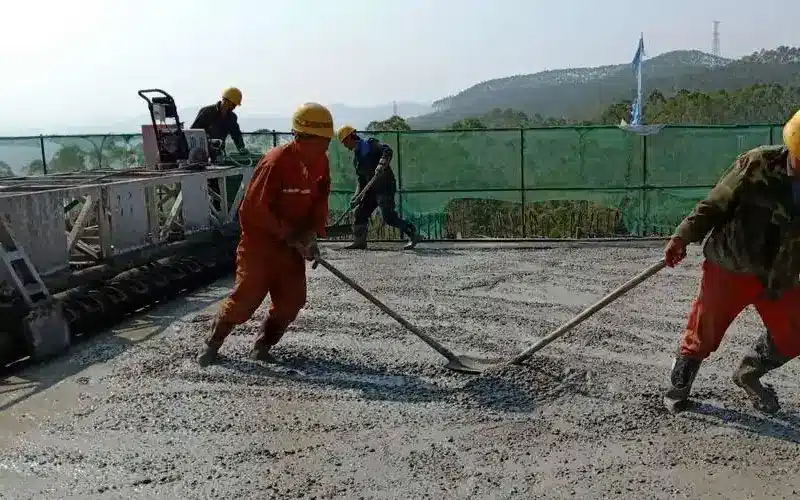
En un país del CCG se construyó durante el verano una vía de servicio de 4 km paralela a una autopista principal (temperatura ambiente de 38–44 °C, humedad relativa 25%, viento de 4–6 m/s). La losa del pavimento tenía un espesor de 200 mm sobre una base granular.
Enfoque:
Resultados a los 28 días:
| Observación | Sección de control | Sección de fibra de PP |
|---|---|---|
| Grietas visibles por contracción del plástico | 23 grietas por cada 100 m | 2 grietas por cada 100 m |
| Ancho máximo de la grieta | 2,5 mm | 0,3 mm |
| Desprendimiento del hormigón en las juntas de construcción | 4 articulaciones afectadas | 0 articulaciones afectadas |
| Limpieza de polvo de superficies | Moderado | Mínimo |
| Resistencia a la compresión (28 días) | 38 MPa | 37 MPa |
La sección de fibra de PP necesaria sin relleno correctivo de grietas ni tratamiento superficial, mientras que el tramo de control requirió una inyección de resina epoxi en 11 puntos antes de abrirse al tráfico.