

What is HPMC and Why is it Essential for Tile Adhesives?
HPMC (Hydroxypropyl Methylcellulose) is a critical additive in tile adhesives. It’s a cellulose ether that transforms ordinary cement-based mixes into high-performance, user-friendly adhesives.
Think of HPMC as the “smart assistant” in your tile adhesive—it doesn’t just stick tiles; it makes the entire system work better, longer, and more reliably.
The 4 Key Roles of HPMC in Tile Adhesives
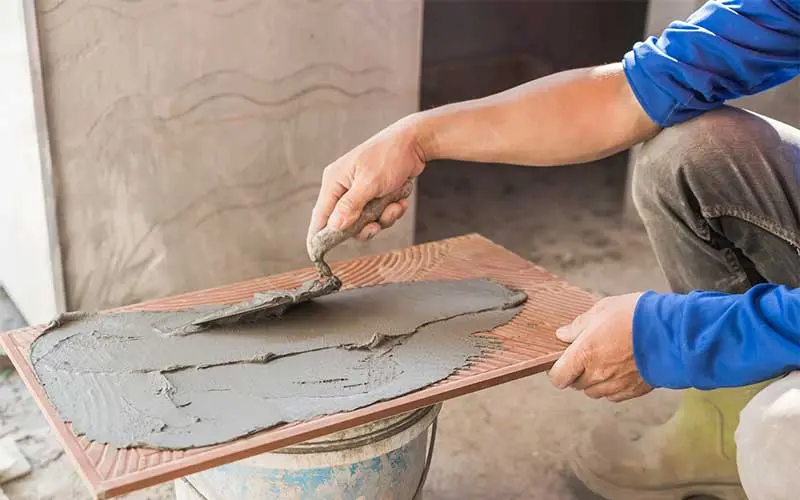
Creating tile adhesive with Michem HPMC requires the right ingredients and proper mixing techniques. Follow this step-by-step process to ensure high-quality results.
1. Water Retention – Letting Cement Cure Properly
Cement needs water to complete its chemical reaction (hydration). Without sufficient water, cement cannot develop its full strength. In porous substrates or hot/dry conditions, water can be absorbed or evaporate too quickly.
What HPMC does:
Forms a protective film that locks in moisture, giving the cement enough time to hydrate fully. This ensures maximum bond strength and reduces shrinkage cracks.
Result:
Stronger, more durable tile installations with less risk of hollow spots (drumming).
2. Thickening & Anti-Sag – Keeping the Adhesive in Place
Thin, watery adhesives can sag or slump on vertical surfaces, making application difficult and inconsistent.
What HPMC does:
Increases viscosity and provides structural stability, allowing the adhesive to be applied in a smooth, even layer that holds its position without slipping.
Result:
Easier application on walls and ceilings, especially with larger format tiles.
3. Extended Open Time – No Rush During Installation
Standard adhesives can start to skin over quickly, leaving less time for tile adjustment.
What HPMC does:
Slows down water loss and extends the “workable” period (open time) to 20–30 minutes or more, allowing installers to place and adjust tiles without panic.
Result:
More precise installations and reduced material waste.
4. Improved Adhesion & Anti-Slip – Tiles Stay Put
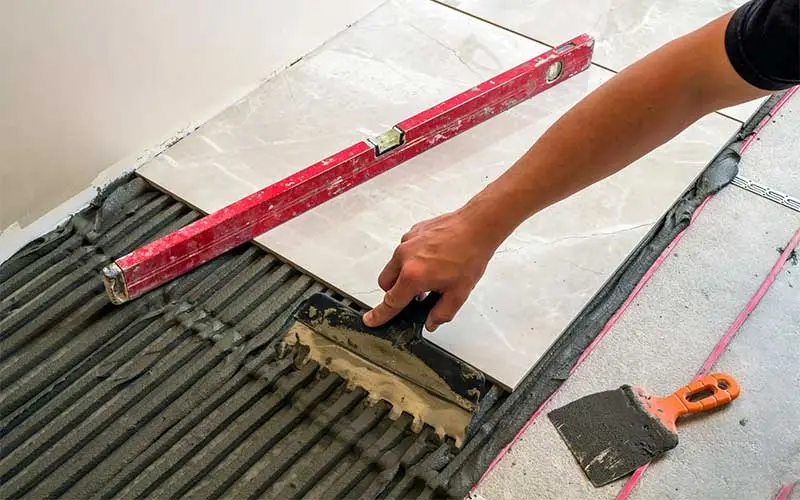
Large, heavy tiles (e.g., 600x1200mm porcelain or natural stone) can slide under their own weight before the adhesive sets.
What HPMC does:
Provides immediate “grab” (initial tack) to hold tiles in position, while still allowing minor repositioning if needed.
Result:
Secure placement of large-format tiles with consistent grout lines.
Where is HPMC Used in Tile Adhesives?
Anvendelse
HPMC’s Main Role
Recommended Viscosity
Interior Wall Tiling
Anti-sag, smooth application, extended open time
40,000–60,000 mPa·s
Interior Floor Tiling
Water retention, bonding strength
20,000–40,000 mPa·s
Exterior Wall Tiling
Water resistance, weather durability, anti-sag
60,000–80,000 mPa·s
Large-Format Tiles
High adhesive strength, anti-slip
60,000–100,000 mPa·s
Thin-Bed Systems
High water retention, easy workability
40,000–60,000 mPa·s
How to Choose the Right HPMC Grade
Two main factors determine HPMC performance: viscosity and ether substitution ratio (methoxy/hydroxypropoxy content).
1. Viscosity Selection (Common Ranges)
Low viscosity (10,000–20,000 mPa·s): Suitable for self-leveling compounds, plasters.
Medium viscosity (40,000–60,000 mPa·s): Ideal for most tile adhesives – balances workability and water retention.
High viscosity (80,000–100,000 mPa·s): Best for exterior applications, large tiles, or vertical surfaces where anti-sag is critical.
Recommendation:
For general interior tile adhesives, start with 40,000–60,000 mPa·s.
2. Ether Substitution Ratio
Higher methoxy content: Better water retention, suitable for hot/dry climates.
Higher hydroxypropoxy content: Faster dissolution, ideal for factory premixes and rapid dispersion.
Recommendation:
A balanced substitution ratio (e.g., methoxy ~28–30%, hydroxypropoxy ~7–12%) works well for most applications.
Typical Dosage of HPMC in Tile Adhesive Formulas
Tile Adhesive Type
Recommended HPMC Dosage (% of dry powder weight)
Standard Interior Tile Adhesive
0.2% – 0.4%
Exterior Tile Adhesive
0.3% – 0.5%
Large-Format Tile Adhesive
0.4% – 0.6%
Fast-Setting Tile Adhesive
0.15% – 0.3%
Important: More HPMC is not always better. Overdosing can cause:
Difficult mixing
Increased cost
Overly long drying time
Reduced final strength
Practical Application Tips for HPMC-Modified Tile Adhesives
Mix Thoroughly HPMC needs time to dissolve and hydrate. First dry-mix HPMC with other powders, then add water. Mix well, let sit for 3–5 minutes, then remix briefly before use.
Consider Ambient Conditions In hot or windy weather, water evaporates faster. You may need to increase HPMC dosage slightly or choose a grade with higher methoxy content for better water retention.
Avoid Premixing Large Batches Even with extended open time, mix only what you can use within 1–2 hours to prevent skinning in the bucket.
Pre-wet Highly Absorbent Substrates While HPMC improves water retention, porous surfaces (e.g., aerated concrete, old brick) should still be dampened before application to prevent rapid moisture loss.
Frequently Asked Questions (FAQ)
What’s the difference between HPMC, MC, and CMC?
MC (Methyl Cellulose): Good water retention, but lower heat resistance.
CMC (Carboxymethyl Cellulose): Lower cost, but poor water resistance – not suitable for exterior applications.
HPMC (Hydroxypropyl Methylcellulose): The most widely used in tile adhesives. Offers the best balance of water retention, workability, heat resistance, and compatibility with other additives.
Does HPMC cause yellowing or discoloration?
No. HPMC is a chemically stable, white/off-white powder. It does not cause yellowing or affect the color of the adhesive.
Does HPMC weaken the adhesive?
On the contrary—by improving water retention, HPMC allows cement to hydrate fully, leading to higher final strength and better long-term durability.
How long does HPMC take to dissolve?
Depending on grade and temperature, full dissolution typically takes 5–15 minutes. Letting the mixed adhesive rest for a few minutes before use ensures optimal performance.
Can HPMC replace redispersible polymer powder (RDP)?
No. HPMC improves workability and water retention; RDP enhances flexibility, adhesion, and toughness. They are complementary and often used together for premium tile adhesives.
Unlike low-grade HPMC, Michem guarantees uniform viscosity and purity, leading to better construction results.
Eco-Friendly & Safe
Our non-toxic and environmentally friendly formulation makes it ideal for modern construction.
Excellent Customer Support & Technical Guidance
We provide technical support to help you choose the right HPMC grade for your project.
Quick Reference Guide
HPMC = Water retention + Workability + Open time – it makes tile adhesives easier to use and more reliable.
For interior walls: medium viscosity (40,000–60,000). For exterior/large tiles: high viscosity (60,000+).
Dosage: 0.2–0.5% by weight of dry mix. Start low and adjust based on performance.
Mix well, pre-wet porous substrates, and avoid mixing too much at once.
Conclusion
HPMC may not be the most expensive component in your tile adhesive formula, but it’s one of the most impactful. It works behind the scenes to ensure consistent application, strong bonding, and professional results.
Choosing the right HPMC grade and dosage can significantly improve your product’s performance—and your customers’ satisfaction.
learn more about Michem HPMC and improve your mortar quality!