







How to Make Wall Putty with Michem HPMC: A Complete Guide
Introduction
Wall putty is a crucial material in construction, used to create smooth surfaces before painting. The quality of wall putty largely depends on its composition, and Michem HPMC (Hydroxypropyl Methyl Cellulose) plays a key role in improving adhesion, water retention, and durability. If you’re looking to formulate high-quality wall putty using Michem HPMC, this guide covers everything—from ingredients to the step-by-step process and common mistakes to avoid.
What is the Role of Michem HPMC in Wall Putty?
Michem HPMC enhances the properties of wall putty by improving its workability, water retention, and adhesion. It prevents cracks, enhances spreadability, and ensures a smooth application. Additionally, it increases the tensile strength of the putty, making it more durable and long-lasting.
Hydroxypropyl Methyl Cellulose (HPMC) is a water-soluble polymer that acts as a thickener, stabilizer, and binder in wall putty formulations. Without HPMC, the putty may dry too quickly, leading to poor adhesion and surface cracks.
How to Make Wall Putty with Michem HPMC?
Creating wall putty with Michem HPMC requires the right ingredients and proper mixing techniques. Follow this step-by-step process to ensure high-quality results.
Ingredients Needed for Wall Putty (Here’s what you’ll need:
White Cement (40-50%) – The primary binding agent.
Calcium Carbonate (30-40%) – Provides smoothness and bulk.
Michem HPMC (0.3-0.5%) – Improves workability and adhesion.
Water (as needed) – For proper mixing consistency.
Equipment Required
Industrial mixer or hand blender
Measuring scale
Mixing bucket
Protective gear (gloves, mask, and safety glasses)
Step-by-Step Process
Step 1: Dry Mixing of Ingredients
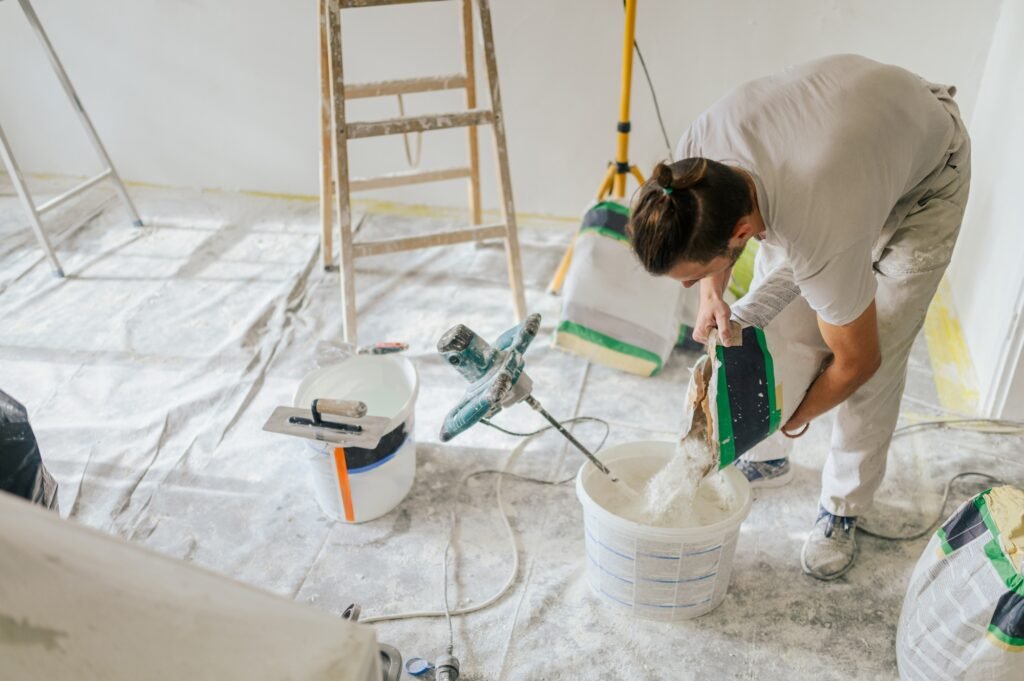
In a clean mixing container, add white cement and calcium carbonate in the right proportions.
Gradually add Mikazone HPMC, ensuring even distribution.
Add RDP and starch ether, which improve elasticity and anti-sagging properties.
Mix all dry ingredients thoroughly for 3-5 minutes until a uniform blend is achieved.
Step 2: Adding Water and Mixing
Slowly add water while continuously stirring.
Use a mixer at low speed to prevent air bubbles from forming.
Mix for 7-10 minutes until a lump-free, creamy paste forms.
Let the mixture sit for 5-10 minutes to allow the HPMC to fully activate.
Step 3: Application and Testing
Apply a thin layer (1-2mm thick) of putty on a test wall.
Check for smoothness, adhesion, and drying time.
If the mixture is too thick, add a small amount of water and remix.
The putty is now ready for application!
Common Mistakes to Avoid When Making Wall Putty
Overmixing – Can introduce air bubbles, weakening the putty.
Using low-quality HPMC – Reduces workability and adhesion.
Adding too much water – Makes the putty too runny and weakens its strength.
Skipping resting time – The mixture needs time to stabilize.
Not measuring ingredients properly – Leads to inconsistent results.
By following proper formulation techniques and using Mikazone HPMC, you ensure that your wall putty remains smooth, strong, and durable.
FAQs on Making Wall Putty with Michem HPMC
What is the formulation for making wall putty?
The basic formulation includes:
White cement (40-50%) – Main binding agent.
Calcium carbonate (30-40%) – Filler for smoothness.
Mikazone HPMC (0.3-0.5%) – Improves workability and adhesion.
RDP Powder (2-5%) – Enhances flexibility.
Water – For mixing to achieve the right consistency.
How do you make a wall putty mixture?
Mix white cement, calcium carbonate, and Mikazone HPMC.
Slowly add water while stirring continuously.
Mix until a smooth paste forms without lumps.
Let it sit for 5-10 minutes before use.
What is HPMC used for in construction?
HPMC (Hydroxypropyl Methyl Cellulose) is used in:
Wall putty – Improves adhesion and prevents cracks.
Tile adhesives – Enhances bonding strength.
Cement plaster – Provides water retention and smooth application.
Self-leveling compounds – Ensures even spread and stability.
How do you make a wall putty mixture?
Mix white cement, calcium carbonate, and Mikazone HPMC.
Slowly add water while stirring continuously.
Mix until a smooth paste forms without lumps.
Let it sit for 5-10 minutes before use.
2. Improved Workability & Consistency
HPMC acts as a rheology modifier, making mortar smoother and easier to spread. It prevents sagging and separation, ensuring a uniform and even application.
3. Increased Adhesion Strength
Poor adhesion can cause mortar to delaminate from bricks or concrete surfaces. HPMC enhances the bonding strength between mortar and surfaces, reducing cracks and increasing durability.
4. Delayed Setting Time for Better Application
In hot climates, cement mortar sets too quickly, leading to poor bonding and cracking. HPMC slows down the setting time, allowing for easier handling and better finishing.
5. Reduced Mortar Bleeding & Shrinkage
Bleeding occurs when excess water rises to the surface, weakening the mortar. HPMC prevents bleeding and shrinkage, maintaining the integrity of the structure.
What is the Best HPMC Grade for Mortar?
Choosing the right HPMC grade is essential for optimal mortar performance. Different grades vary in viscosity, purity, and water retention.
Recommended HPMC Grades for Masonry Mortar:
HPMC Grade
Viscosity (mPa.s)
Anvendelse
Low Viscosity (400-2,000)
Tile adhesive, self-leveling mortar
Medium Viscosity (4,000-20,000)
Plastering, cement-based mortar
High Viscosity (40,000-100,000)
High-strength masonry mortar
For masonry mortar, a medium to high viscosity HPMC is ideal to ensure proper bonding, water retention, and workability.
HPMC vs. Other Additives: Which is Better?
Several additives can be used in masonry mortar, but HPMC outperforms most alternatives in water retention, bonding, and durability.
Comparison of HPMC with Other Additives:
Additive
Water Retention
Workability
Adhesion
Setting Time Control
HPMC
✅ High
✅ Excellent
✅ Strong
✅ Controlled
PVA (Polyvinyl Alcohol)
❌ Low
✅ Good
❌ Weak
❌ Fast
Starch Ether
✅ High
✅ Good
❌ Weak
❌ Not Controlled
Redispersible Powder
✅ High
✅ Good
✅ Strong
❌ Fast
HPMC is the best choice due to its balanced performance in all categories.
Common Mistakes When Using HPMC in Mortar
To maximize HPMC’s benefits, avoid these common mistakes:
Incorrect Mixing:
Always pre-mix HPMC with dry ingredients before adding water. Directly adding HPMC to water can cause clumping.
Overuse of HPMC:
Excessive HPMC can lead to delayed setting time and reduced compressive strength. Follow recommended dosages.
Using Low-Quality HPMC:
Impurities in low-grade HPMC affect mortar performance and bonding strength. Always choose high-quality HPMC like MIKAZONE.
Unlike low-grade HPMC, Michem guarantees uniform viscosity and purity, leading to better construction results.
Eco-Friendly & Safe
Our non-toxic and environmentally friendly formulation makes it ideal for modern construction.
Excellent Customer Support & Technical Guidance
We provide technical support to help you choose the right HPMC grade for your project.
Conclusion
HPMC is a game-changer in masonry mortar, enhancing water retention, workability, and adhesion for superior construction performance. For the best results, choose Michem HPMC—a high-quality, consistent, and reliable product trusted by construction professionals worldwide.
learn more about Michem HPMC and improve your mortar quality!